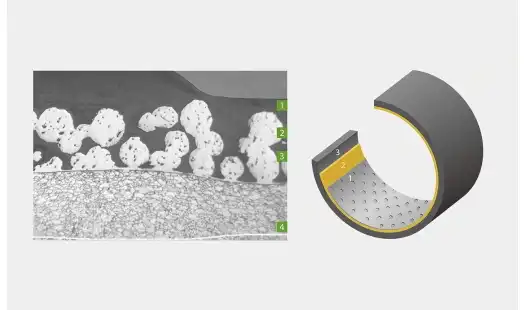
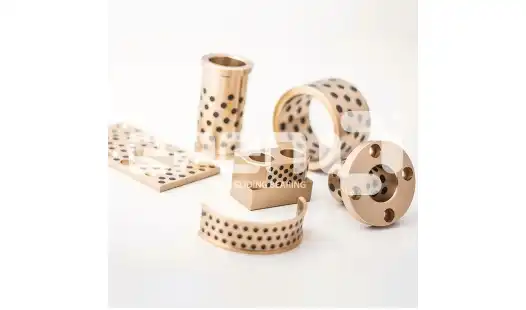
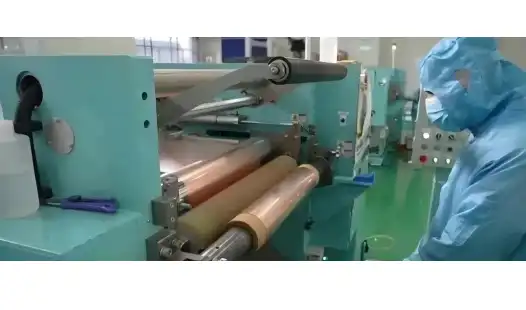
Abnormal noise in sliding bearings is often an early warning signal of failure, especially in applications involving oscillatory motion, linear motion, heavy loads, or harsh environments. Ignoring these sounds can quickly lead to accelerated wear, unplanned downtime, and costly equipment damage.
For OEMs, maintenance engineers, and industrial buyers worldwide, understanding the root causes of abnormal bearing noise—and how to prevent them—is essential for improving reliability and extending service life.
This article outlines the seven most common causes of abnormal noise in sliding bearings, along with practical countermeasures and proven engineering solutions.
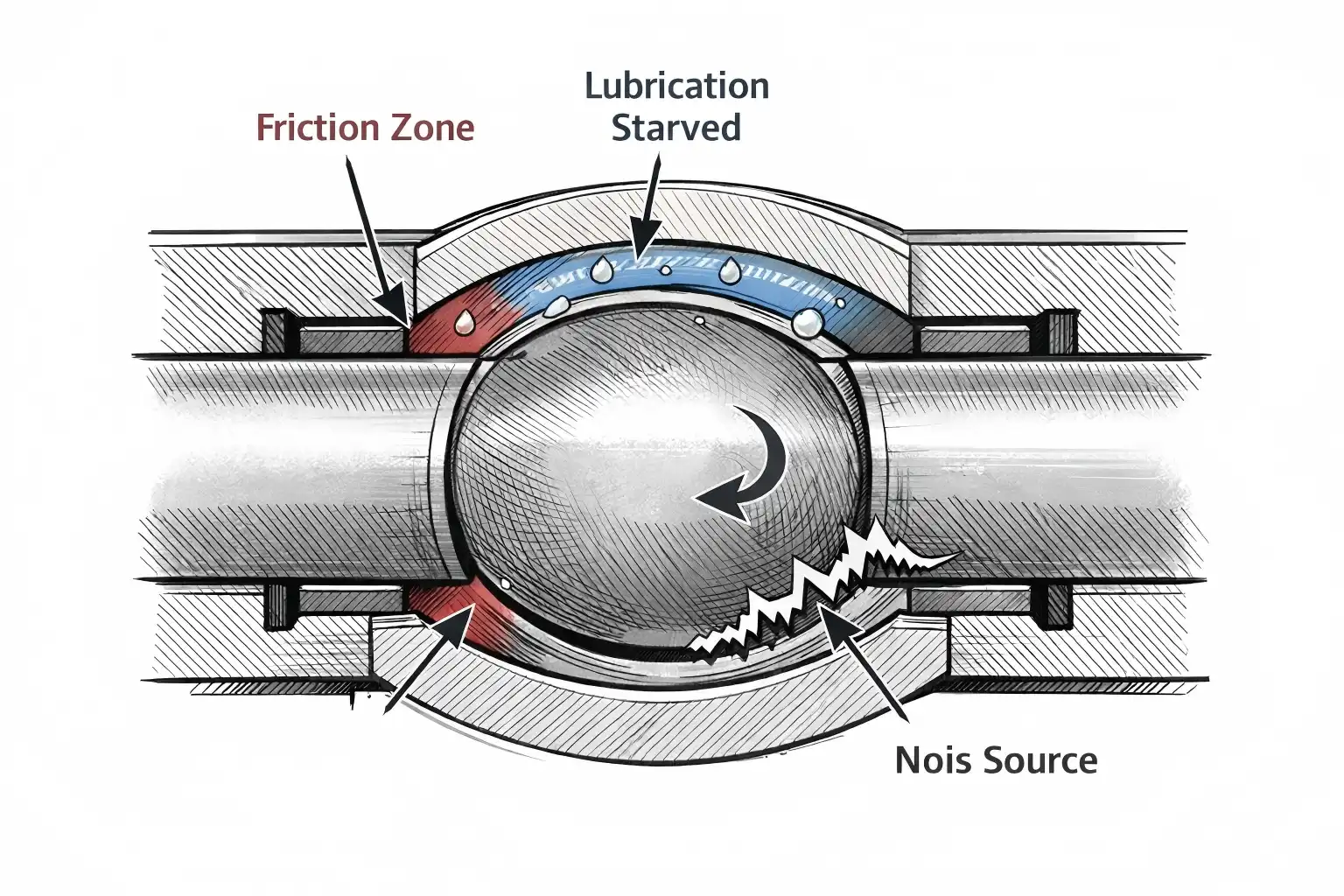
What Is “Abnormal Noise"in Sliding Bearings?
Unlike rolling bearings, sliding bearings typically operate quietly under correct conditions. When noise appears—such as squealing, grinding, knocking, or vibration—it usually indicates:
Boundary or dry friction
Surface damage or material fatigue
Installation or design issues
Environmental contamination
High-quality sliding bearings, such as those engineered by CNEPEN, are designed to minimize these risks even in demanding applications.
🔗 Explore CNEPEN sliding bearing solutions:
https://www.cnepen.com/sliding-bearings
Cause 1: Insufficient or Incorrect Lubrication
Symptoms
High-pitched squealing
Dry friction noise during start-stop cycles
Temperature rise
Root Cause
Inadequate lubrication prevents the formation of a stable friction film, forcing metal-to-metal contact.
Countermeasures
Select self-lubricating or maintenance-free materials
Match lubricant type to load, speed, and temperature
Avoid over- or under-lubrication
🔗 Self-lubricating sliding bearings:
https://www.cnepen.com/self-lubricating-bearings
Cause 2: Material Mismatch or Poor Bearing Selection
Symptoms
Persistent noise from early operation
Rapid wear despite proper lubrication
Root Cause
Bearing materials not suited for the operating conditions (load, speed, temperature, or motion type).
Countermeasures
Use application-specific bearing materials
Choose composite or bi-metallic bushings for heavy loads
Consider high-temperature or corrosion-resistant designs
🔗 Engineered bearing materials by CNEPEN:
https://www.cnepen.com/bearing-materials
Cause 3: Misalignment or Improper Installation
Symptoms
Knocking or cyclic noise
Uneven wear patterns
Increased vibration
Root Cause
Shaft misalignment or incorrect press-fit leads to localized stress and uneven contact.
Countermeasures
Ensure proper housing tolerances
Use bearing designs that tolerate misalignment
Follow recommended installation procedures
🔗 Technical support & custom bearing solutions:
https://www.cnepen.com/custom-bushings
Cause 4: Contamination by Dust, Debris, or Moisture
Symptoms
Grinding or scratching noise
Sudden increase in wear
Lubricant degradation
Root Cause
Foreign particles disrupt the sliding interface and damage the bearing surface.
Countermeasures
Use sealed or maintenance-free sliding bearings
Select materials resistant to abrasion
Improve environmental sealing
Cause 5: Excessive Load or Shock Loading
Symptoms
Deep knocking sounds
Deformation-related noise
Premature bearing failure
Root Cause
Operating loads exceed bearing design limits, often combined with impact or shock forces.
Countermeasures
Increase bearing contact area
Use reinforced or bi-metallic bushings
Re-evaluate load distribution in the design stage
🔗 High-load bi-metallic bushings:
https://www.cnepen.com/bi-metallic-bushings
Cause 6: High-Temperature Operation
Symptoms
Noise increase after warm-up
Material softening or deformation
Lubricant breakdown sounds
Root Cause
Elevated temperatures degrade polymers, lubricants, or surface layers.
Countermeasures
Select high-temperature sliding bearing materials
Avoid standard polymers in thermal-critical zones
Use dry-running or solid-lubricant designs
Cause 7: Fatigue Wear and Surface Damage
Symptoms
Intermittent clicking or knocking
Progressive noise increase over time
Visible surface flaking or scoring
Root Cause
Repeated cyclic stress leads to fatigue damage at the sliding interface.
Countermeasures
Optimize bearing material and surface structure
Reduce peak stress through better load distribution
Replace bearings before end-of-life failure
Why Choosing the Right Bearing Supplier Matters
Abnormal noise is rarely caused by a single factor—it is usually the result of material selection, design, installation, and operating conditions combined.
Working with an experienced manufacturer like CNEPEN provides:
Application-specific material recommendations
Proven designs for oscillatory and linear motion
Solutions for high temperature and harsh environments
Stable global supply for OEMs and distributors
🔗 Contact CNEPEN for technical consultation:
https://www.cnepen.com/contact-us
Conclusion:Silence Is a Sign of Reliability
In sliding bearings, noise is never “normal.” It is an early indicator of friction imbalance, material failure, or environmental stress.
By understanding the seven key causes of abnormal noise and implementing the right countermeasures—especially through proper bearing selection—you can dramatically improve equipment reliability, reduce downtime, and lower total cost of ownership.
For quiet, durable, and engineered sliding bearing solutions, trust CNEPEN to support your applications worldwide.

Partner with Epen for Superior Sliding Bearing Solutions
Jiashan Epen Bearing Co., Ltd. makes high-quality plain bearings and wear plates that are designed to keep noise down and performance up in difficult industrial settings. Our wide range of products includes bimetal bearings, metal-plastic composite bearings, and single-metal series parts. These are used in cars, metalworking, engineering machinery, and construction equipment all over the world.
Noise control is very important for industrial operations, and as a sliding bearings manufacturer that people trust, we know this. To help you choose the best bearing parts for your needs, our knowledgeable engineering team offers technical advice, tailored solutions, and ongoing support. Epen offers low prices without sacrificing quality, whether you need standard catalog sizes or custom designs.
Do you want to get rid of bearing noise problems and make your equipment more reliable? To talk about your needs and find out how Epen's advanced sliding bearing solutions can help your business, get in touch with our technical experts today. For professional help and good prices tailored to your business needs, email us at epen@cnepen.cn.
References
Johnson, M.R. "Tribological Analysis of Plain Bearing Noise Generation Mechanisms." Journal of Industrial Tribology, Vol. 45, No. 3, 2023, pp. 127-142.
Chen, L. and Williams, D.K. "Lubrication Strategies for Noise Reduction in Heavy Machinery Sliding Bearings." International Conference on Mechanical Engineering, 2023, pp. 234-248.
Thompson, A.B. "Misalignment Effects on Acoustic Emissions in Industrial Plain Bearings." Mechanical Systems and Signal Processing, Vol. 78, 2024, pp. 89-104.
Rodriguez, C.M. "Contamination Impact Assessment on Sliding Bearing Performance and Noise Generation." Wear Analysis Quarterly, Vol. 29, No. 2, 2023, pp. 156-171.
Smith, R.J. and Kumar, S. "Thermal Management Techniques for Noise Control in Construction Equipment Bearings." Heavy Machinery Engineering Review, Vol. 31, 2024, pp. 67-82.
Anderson, P.L. "Material Selection Criteria for Low-Noise Plain Bearing Applications in Mining Equipment." Materials and Design for Industrial Applications, Vol. 52, 2023, pp. 203-218.