Preventing Failure: Maintenance Tips for Sliding Bearings
Understanding Sliding Bearing Failures
- Understanding Sliding Bearing Failures
- Key Maintenance Principles to Prevent Sliding Bearing Failure
- Materials and Design Considerations in Enhancing Bearing Longevity
- Comparison of Sliding Bearing Maintenance with Other Bearing Types
- Practical Tips and Best Practices for Effective Sliding Bearing Maintenance
- Conclusion
- FAQ
- Partner with Epen for Reliable Sliding Bearing Solutions
- References
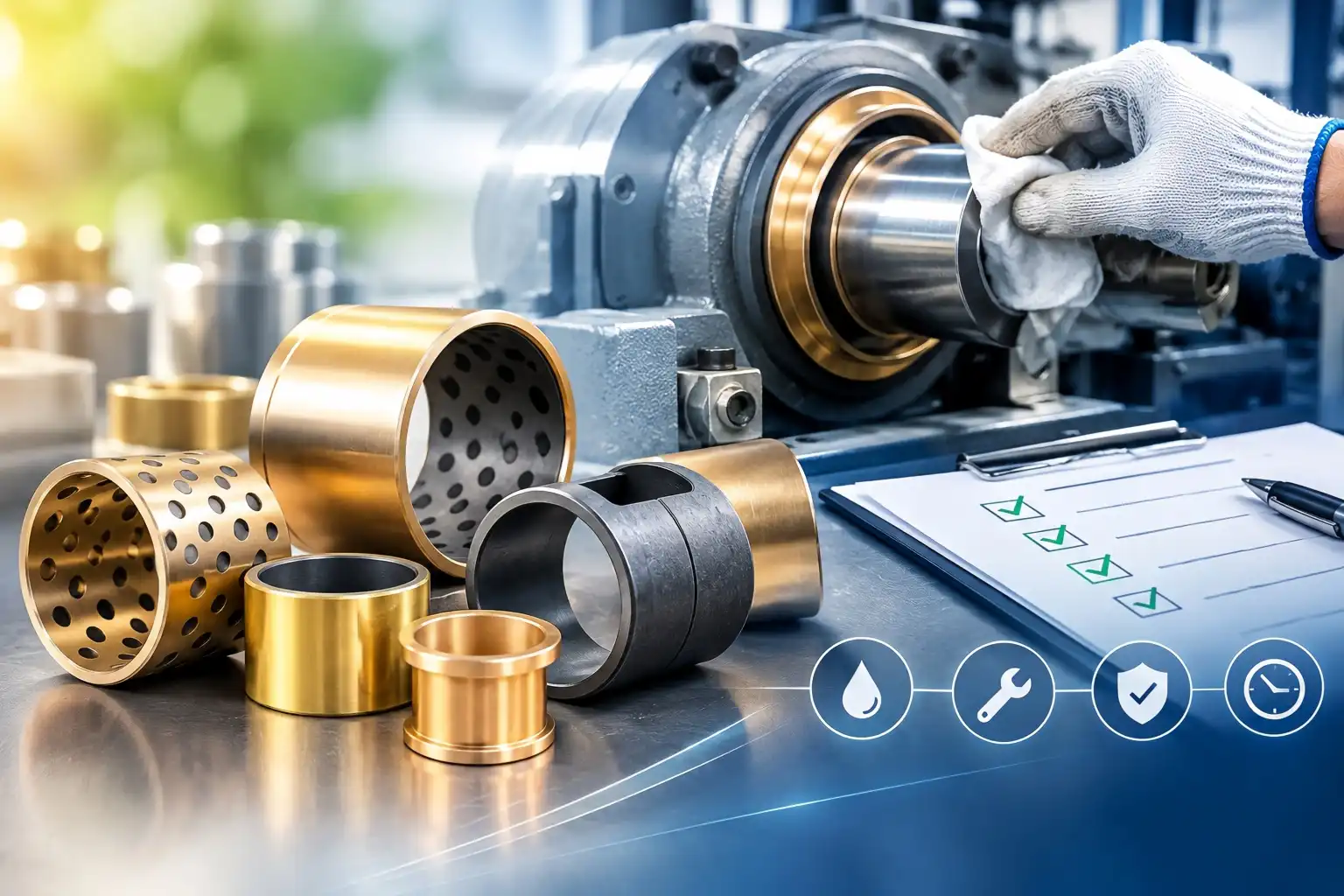
Sliding bearings are critical components in rotating machinery, and their reliability directly affects equipment uptime and operating costs. This article outlines practical maintenance tips to help prevent premature failure and extend bearing service life.
Understanding Sliding Bearing Failures
Sliding bearings are exposed to tough working conditions in many industries, which makes them susceptible to a number of failure processes. When repair teams see these trends, they can step in before major breakdowns happen.
Common Causes of Bearing Failure
Breakdown of the lubrication is the main thing that kills bearings. When lube coats break down or disappear completely, metal-to-metal contact makes too much heat and speeds up wear. Soon after, contamination happens. Dirt, metal bits, and water get into bearing surfaces and act as abrasive materials that score and pit the contact. Overloading a machine mechanically happens when it works beyond its designed limits, putting too much stress on it and breaking things that support it. When shafts and housings are not lined up correctly, the load is distributed unevenly, which wears down contact edges too quickly.
Recognizing Failure Modes
Raised lines and scratches on bearing surfaces are signs of abrasive wear, which is more common in dusty places like farms and mines. Fatigue spalling shows up as small holes where cracks in the rock have reached the surface after being stressed over and over again. When friction heat goes too far, it can cause damage that looks like coloring, changes in size, or melting. When too many loads forever bend or compress the shape of a bearing, lowering clearances and fit tolerances, this is called structural deformation.
Operational and Financial Consequences
Every design of sliding bearings includes the fastest speeds that are allowed based on PV limits, which are the result of pressure and speed. When these limits are crossed, thermal runaway happens, where frictional heat production outpaces heat disposal capacity, fatally melting bearing liners. When makers of industrial presses size bearings for high-cycle uses, they take these limits into account by using velocity factors that take into account how the bearings will be lubricated and cooled. Keeping operating speeds between 75 and 80% of their rated maximums protects against short-term overloads that are typical in heavy machinery service.
Key Maintenance Principles to Prevent Sliding Bearing Failure
Strategies for proactive upkeep are the key to making sure that bearings work reliably in all kinds of industries.
Proper Lubrication Practices
To choose the right oils, you need to match the thickness grades to the speeds and temperatures that will be used. Heavy-grade oils with extreme pressure additives are needed for building equipment that works under a lot of stress. On the other hand, lighter formulas that reduce fluid friction are needed for high-speed automation equipment. Application intervals rely on job cycles. For example, if the machine is used continuously in a mine, it may need to be oiled every day, but if it is only used occasionally in agriculture, it can be oiled once a week. Analyzing the oil to check on the state of the lube shows how contaminated it is, how many additives are being used up, and how much moisture is getting in before damage happens. Facilities that use systematic maintenance programs say that their bearings last 200 to 400% longer than facilities that use reactive methods.
Routine Inspections and Monitoring
By keeping an eye on the temperature of sliding bearings, you can catch problems early, since bearing temperatures usually rise 15 to 30°F before they show any damage. Using infrared thermography, you can measure without touching the object while it's working, finding hot spots that mean the grease isn't working right or the part isn't lined up right. Vibration analysis finds wear patterns by looking at frequency fingerprints. For example, a rise in loudness at certain frequencies can mean that clearance problems or surface wear are happening. Industry studies show that using predictive maintenance tools can cut down on unexpected failures by 50–70%. This means that planned interventions can happen during fixed downtime instead of having to be done during emergency shutdowns.
Correct Installation and Alignment
From the first day, the bearing's life depends on how well it was installed. Specialized tools, such as hydraulic presses and bearing heaters, make sure that the bearings sit properly without damaging the surface, which can cause stress points. When you line the shaft according to the manufacturer's instructions, which is usually between 0.002 and 0.005 inches of total indicator runout, you stop edge loading that speeds up wear. In marine and offshore uses, alignment tolerances need extra care because wave motion and structure bending make the effects of misalignment worse. Training installation staff on the right way to do things cuts down on early failures caused by installation mistakes, which are responsible for about 30% of all premature bearing failures across all industries.
Materials and Design Considerations in Enhancing Bearing Longevity
When used in challenging situations, the choice of material and design features have a big effect on how well the bearing works.
Material Properties and Selection
Bronze metals can hold a lot of weight and don't wear down easily when used in heavy machinery. Tin-bronze mixtures can support loads of more than 5,000 psi when properly oiled. Babbitt materials are better at embedding because small dirt particles can sink into the softer bearing surface instead of cutting the harder shaft materials. The ability of PTFE composites to lubricate themselves makes them perfect for situations where regular lubrication is hard to do, like when logging equipment is used in rural areas. Metal-plastic composite bearings are useful in automation systems that need to be able to precisely place parts because they are resistant to wear and have low friction coefficients.
Design Features That Extend Service Life
Optimized bearing design includes crowned curves and relieved edges that can handle small movement without putting too much stress on certain areas. Surface treatments like phosphate coatings shorten the time it takes for new tires to break in and protect against rust in marine settings where saltwater can damage bearings. Built-in lubrication ducts spread grease evenly over load-bearing surfaces, stopping dry spots that cause wear. Frictional heat is removed by thermal management features like cooling fins or airflow paths, which keeps the material's qualities within the acceptable ranges.
Customization for Specific Applications
Wear plates that are built into bearing systems help construction tools because they provide replaceable surfaces that make housings last longer. In mining, anti-impact systems with elastomeric buffers or spring parts that reduce pressure loads from moving materials are needed. Offshore bases need special metals that don't rust, like aluminum-bronze or duplex stainless steels, that can stand up to saltwater all the time. Agricultural machinery makers are asking for sealed bearing designs that keep out dust and food leftovers that are common in the field.
Comparison of Sliding Bearing Maintenance with Other Bearing Types
Knowing the differences between bearing systems helps you choose the best parts and upkeep plans.
Maintenance Complexity and Requirements
Due to the constant sliding contact that produces frictional heat, sliding bearings typically need to be lubricated more frequently than rolling element bearings. Journal bearings in naval propulsion systems need to be inspected and oiled almost every day, but protected rolling bearings can go months without needing to be serviced. Because plain bearings are easier to build, they are easier to maintain in the field. For example, in mining operations, workers can often make new bushings on-site, while rolling bearings need special tools and precision parts to be made.
Load Handling and Durability Characteristics
Plain bearings work best when there are a lot of shocks that would damage rolling elements by brinelling, which is when races get lasting dents in them. Impact loads of more than 10,000 pounds are common at the pivot points of construction tools. Sliding bearings handle these loads by compressing the material and padding it with a lubricant film. Rolling bearings are better for precise tasks that need tight radial and axial positioning. This is why they are used in machine tool wheels and automation linear guides. When there are no rolling elements, cage breakdowns and rolling surface spalling don't happen, which can happen with ball and roller bearings in dirty settings like mines and metallurgies.
Cost and Lifecycle Considerations
Sliding bearings are usually cheaper at first, especially when it comes to big sizes where the cost of rolling bearings goes up quickly. A bronze bushing with a width of 12 inches costs a lot less than a tapered roller bearing system with the same capacity. The amount of maintenance work that needs to be done changes the equation. Facilities with skilled maintenance teams that can replace bushings get better lifecycle costs with plain bearings, while operations that don't have those skills benefit from longer rolling bearing service intervals even though they cost more to replace. In production-critical applications, downtime costs often far outweigh the costs of the parts, so they should be included in the total cost of ownership estimates.
Practical Tips and Best Practices for Effective Sliding Bearing Maintenance
When systematic repair methods are used, machine reliability and running costs go up in a way that can be measured.
Establishing Systematic Lubrication Schedules
Write down what kind of lube, how much, and how often each sliding bearings bearing position needs to be oiled. Technicians can quickly find service spots and needs when color-coded lubrication charts are placed near the equipment. Automated lubrication systems give the right amount of grease at set times, so people can't make mistakes in important situations. These systems are especially useful for building tools with many bearing points that need to be serviced. They cut down on servicing time by 60–70% and improved the consistency of the lubrication.
Leveraging Condition Monitoring Technologies
Wireless sensor networks let equipment companies that are spread out keep an eye on temperature and sound all the time. Cloud-based analytics systems look at sensor data and find trends that can tell you about problems weeks before they happen. When facilities use condition-based maintenance, problems related to bearings drop by 50–65%, and maintenance workers are better distributed. Oil analysis tools find contamination and deteriorating lubricants. They give useful information for adjusting the time between lubrications and finding the source of pollution.
Preventing Contamination
The choice of seal is very important for keeping bearing surfaces clean from outside contaminants. Labyrinth seals make winding tracks that keep particles out without touching moving surfaces. This makes them perfect for dusty places like mines and farms. Ventilation in the bearing cover with desiccant breathers stops moisture from getting in during thermal cycles. Cleaning the outside of equipment on a regular basis stops dirt from getting into the bearings during repair.
Personnel Training and Procedures
Structured training programs that teach the right way to install things, the right amount of torque, and how to position them lessen mistakes that happen during installation. Written instructions with pictures as references make sure that repair shifts all follow the same steps. Operators can report strange noises, vibrations, or temperatures right away thanks to prompt response methods. This keeps small problems from getting worse and leading to major fails. After adding operator-based check programs to regular maintenance, one metallurgical plant cut the number of bearing failures by 40%.
Sourcing Quality Components
How well a bearing works depends a lot on how well it was made and how consistent the materials are. Material approvals, dimensional inspection reports, and application engineering support from reputable makers help you choose the best parts. More and more, fake bearings are showing up in supply lines, which makes them less reliable. To fix this, procurement teams should check the identities of suppliers and ask for proof of material specs. Building connections with makers that offer OEM-level quality and technical support is very helpful when trying to solve problems that are specific to an application or making solutions that work best in a certain setting.
Conclusion
To keep sliding bearings from breaking, you need to be committed to systematic care practices that include lubrication, regular tracking, and choosing high-quality parts. The ideas we've talked about here—understanding how things fail, using predictive maintenance, choosing the right materials, and training staff—work in all kinds of fields and can be measured. When facilities start thorough bearing repair plans, they usually see a 50–70% drop in unexpected failures and a much longer component life than expected. Putting money into regular maintenance pays off by making tools more available, cutting down on the cost of emergency repairs, and making things safer.
FAQ
What are the most common signs that a sliding bearing needs maintenance?
Temperature rises of 15 to 30°F above usual working ranges are often a sign of a problem with lubricant or more friction from wear. Strange noises, like screaming, grinding, or clicking, can mean that the surface is damaged or not properly oiled. Changes in vibrations that can be picked up by mobile meters or by touching the housings of equipment indicate that wear is progressing or that clearance problems are starting to show up. Visible grease leaks or discoloration is a sign of a broken seal or heat degradation that needs to be fixed right away.
How often should sliding bearings be lubricated in heavy machinery?
How often you lubricate relies on how the machine is being used, how much load it is carrying, and weather factors. When construction equipment is used all the time in dusty conditions, the pivot points and boom joints usually need to be oiled every day. The amount of dirt and load on mining conveyors that run 24 hours a day, seven days a week may mean that they need to be oiled every 8 to 12 hours. Agricultural equipment that is only used during certain times of the year may need to be serviced once a week while it is being used and thoroughly oiled before being put away. Manufacturers of equipment give basic advice that should be changed based on real-world experience and data from state tracking.
Can sliding bearings be repaired or must they be replaced when damaged?
Small scratches and scoring on the surface can sometimes be fixed by cleaning and better greasing, especially in bearing materials that are softer, like babbitt. When wear causes too much space, deep cutting, or changes in size, the part needs to be replaced to get it working properly again and keep shafts and housings from getting damaged again. Since replacing a bearing doesn't cost as much as paying for downtime, it's usually better to do it before trying to fix it in production-critical situations.
EPEN EB65 BUSHING

Partner with Epen for Reliable Sliding Bearing Solutions
Manufacturing operations cannot afford unexpected bearing failures that halt production and inflate maintenance budgets. At Jiashan Epen Bearing Co., Ltd., we specialize in metal-plastic composite bearings, bimetal bearings, and wear plates engineered specifically for demanding applications in construction, mining, marine, and industrial automation sectors. Our technical team provides application-specific recommendations matching bearing materials and designs to your exact operating conditions, whether you face extreme loads, corrosive environments, or high-contamination challenges. As an experienced sliding bearing manufacturer serving both domestic and international markets, we deliver standard catalog sizes and custom solutions at competitive rates without compromising quality standards. Contact our engineering team at epen@cnepen.cn to discuss your bearing maintenance challenges and discover how our products can extend equipment life while reducing your total cost of ownership.
References
Hamrock, B.J., Schmid, S.R., and Jacobson, B.O. (2004). Fundamentals of Fluid Film Lubrication. Marcel Dekker, New York.
Neale, M.J. (1993). The Tribology Handbook. Butterworth-Heinemann, Oxford.
Budynas, R.G. and Nisbett, J.K. (2015). Shigley's Mechanical Engineering Design. McGraw-Hill Education, New York.
Bhushan, B. (2013). Principles and Applications of Tribology. John Wiley & Sons, New York.
Khonsari, M.M. and Booser, E.R. (2008). Applied Tribology: Bearing Design and Lubrication. John Wiley & Sons, Chichester.
American Society of Mechanical Engineers. (2019). ASME B106.1M: Design of Transmission Shafting. ASME International, New York.

Dr. Eleanor "Ellie" Penn
Dr. Eleanor "Ellie" Penn is our Senior Tribology Specialist at Epen, where she bridges the gap between deep material science and real-world engineering challenges. With over 15 years of experience in the field of sliding bearings and self-lubricating materials, she possesses a passion for solving the most complex problems of friction, wear, and maintenance. Ellie holds a Ph.D. in Mechanical Engineering with a focus on tribology. Her mission is to empower engineers and maintenance professionals with practical knowledge and best practices that extend equipment life, reduce downtime, and drive innovation. When she's not in the lab or writing, you can find her volunteering at STEM workshops to inspire the next generation of engineers. Areas of Expertise: Sliding Bearing Design, Material Selection, Failure Analysis, Preventive Maintenance, Application Engineering.
Contact to EPEN Bearing
If you have any questions please do not hesitate to call or write us.