How to Read EB65 Bushing Specifications: A Buyer’s Checklist
Understanding the Basics of EB65 Bushing Specifications
- Understanding the Basics of EB65 Bushing Specifications
- Detailed Breakdown of EB65 Bushing Dimensions and Material Composition
- How to Interpret Performance and Compatibility Data
- Installation, Maintenance, and Benefits Based on Specifications
- Procurement Considerations: Buying EB65 Bushings with Confidence
- Conclusion
- FAQ
- Source Quality EB65 Bushing Solutions from Epen
- References
Reading EB65 bushing specifications correctly ensures you select components that match your machinery's load, speed, and environmental demands. The EB65 bushing typically features a bimetallic or bronze construction designed for heavy-duty applications, with specifications covering dimensional tolerances (inner/outer diameter, length), material composition (such as CuPb10Sn10 bronze), load capacity ratings, friction coefficients, and temperature limits. Understanding these parameters prevents compatibility errors, reduces downtime, and extends equipment lifespan across construction, mining, marine, and industrial automation sectors.
Understanding the Basics of EB65 Bushing Specifications
When we work with big machines like an excavator pivot, a conveyor system, or a marine winch, the bushing is the hero that no one sees. It fits between moving parts and absorbs shocks and friction to keep your machinery running smoothly. The EB65 bushing in particular has built its reputation in tough settings where failure is not an option.
What Defines the EB65 Bushing
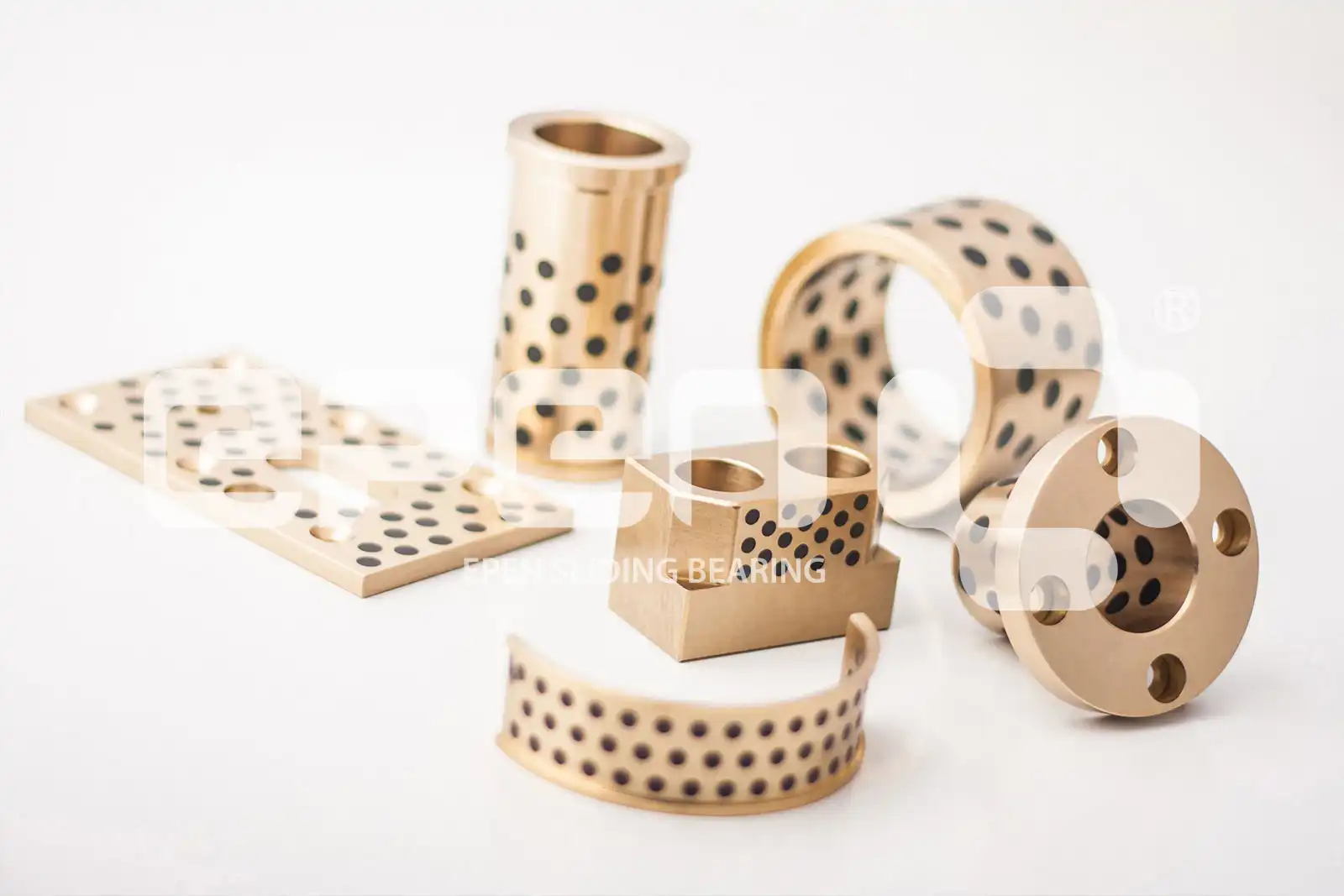
Radial loads in spinning or swaying components are handled by the simple bearing EB65 bushing. It uses a sliding surface between the EB65 bushing material and the shaft instead of rolling components. A manufacturer's catalogue normally lists "EB65 bushing" as a common size or type, however sizes and materials may vary. It maintains alignment under stress, minimizes metal-to-metal contact, and distributes loads.
Core Material Categories
The materials used determine performance. EB65 bushings mostly employ bronze alloys, bimetallic architectures, or hybrid polymers. The most heavy-duty applications employ bronze varieties, notably CuPb10Sn10 (10% lead, 10% tin, and 80% copper), since they can withstand a lot of weight and run in an emergency. Even without lubricant, lead content keeps the machine operating. Miner crushers and construction equipment need this safety feature repaired fast. Steel-bronze bimetallic bushings are framed. Their structure and embeddability improve. Rough particles become caught in the soft bronze coating instead of the hardened shaft. Dusty agricultural or quarry equipment benefits from this.
Key Specification Categories
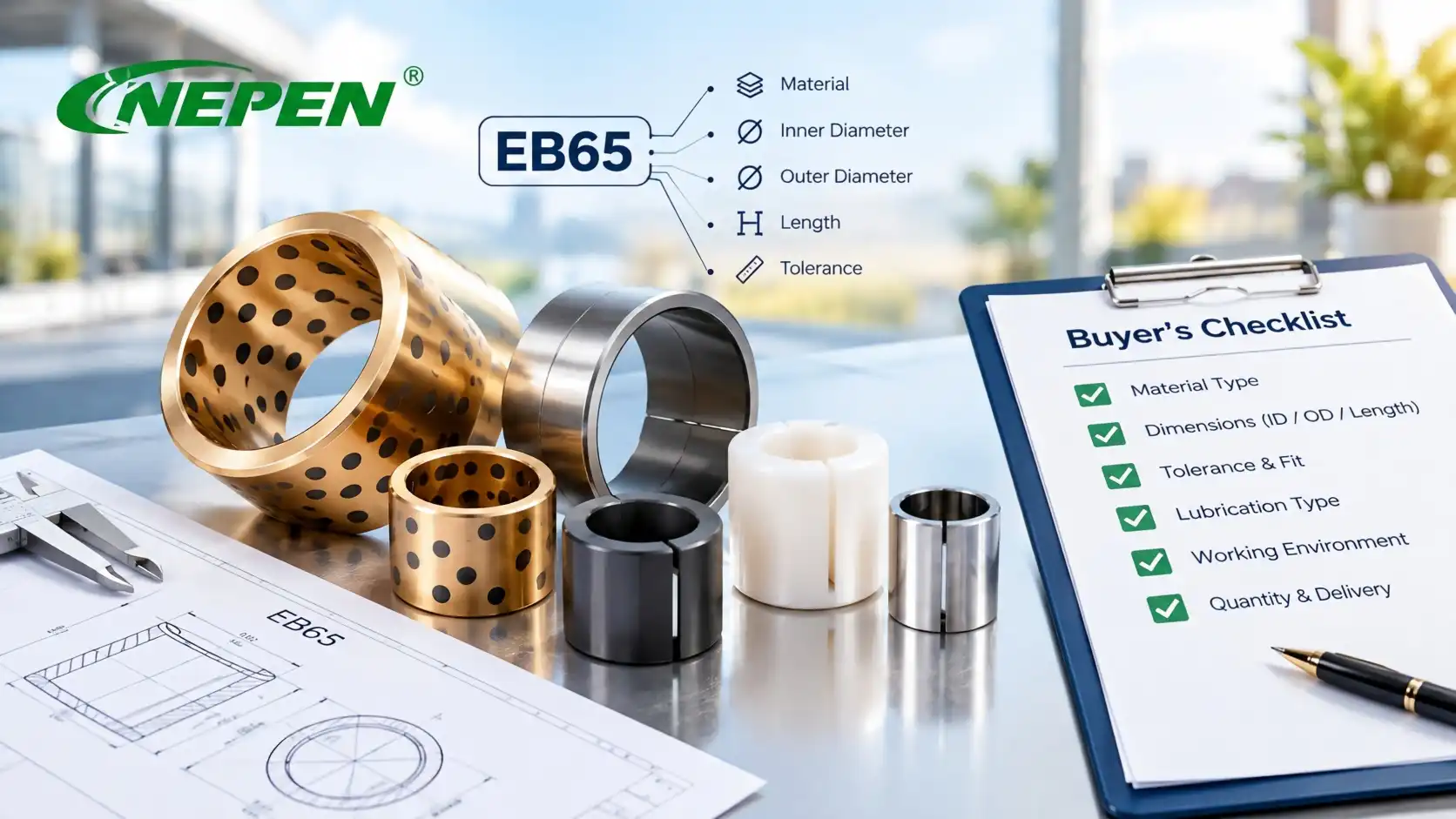
A typical EB65 bushing datasheet has many measurement groups. DIMENSIONS include ID, OD, and axial length. For example, IT7 tolerance ratings indicate part fit. The load capacity, measured in N/mm² or PSI, indicates the EB65 bushing's ability to withstand stress without deforming. To provide worldwide supply chain consistency, material standards employ ISO 3547, DIN 1494, or ASTM B505. Temp limits operational ranges. Excellent brass joints can withstand 250°C. In adequately lubricated conditions, friction coefficients are between 0.06 and 0.16, indicating energy loss and heat production.
If you know these groupings, you can utilize a complicated description sheet to make judgments. Before ordering EB65 bushings, OEM mechanical engineers and mine maintenance managers may rapidly verify whether they fit a crane's boom pivot.
Detailed Breakdown of EB65 Bushing Dimensions and Material Composition
Dimensional perfection involves using the EB65 bushing within its intended function as well as fitting pieces together. Excess space between bearings in a loose EB65 bushing causes vibration, misalignment, and accelerated wear. Too tight an EB65 bushing causes friction heat, which may induce seizure and shatter the housing as it expands.
Interpreting Dimensional Specifications
With sufficient room, the inner width should match the shaft diameter. Spinning allows a hydrodynamic lubricating coating to develop in this area, which is generally 0.02% to 0.1% of shaft width. When loaded, the outer width must interfere with the housing hole to prevent spinning. Load distribution varies with EB65 bushing length. While longer EB65 bushings reduce specific pressure, they need more mounting space. Important tolerance levels. IT7 tolerance of ±0.015mm on a 50mm diameter is used in high-precision manufacturing equipment. That way, all manufacturing batches function the same.
Pay attention to EB65 bushing edge radius and chamfer dimensions on drawings. This prevents installation stress and makes shaft entry easier. In vertical usage like crane hooks or agricultural harvester drives, flange dimensions aid axial alignment and thrust load support.
Material Composition and Performance Correlation
Ability is affected by composition of the CuPb10Sn10 bronze alloy. It's 80% copper, 10% tin, and 10% lead. Its Brinell hardness ranges from 70-100 HB, allowing it to withstand 280 N/mm² static stresses while accommodating shaft defects and minor misalignments. The EB65 bushing can survive millions of load cycles in reciprocating applications like hydraulic press guides because it contains tin. After a short-term failure of external lubrication, lead will spread over contact surfaces and stop a catastrophic seizure until maintenance restores oil flow.
The 0.3–0.5 mm bronze layer is bonded to a 0.5–1.5 mm low-carbon steel backing. Withstanding dynamic stresses of up to 140 N/mm², this structure remains embedded. A steel layer handles structural stresses, while a bronze layer handles tribological performance. For wave impact and seawater corrosion-prone rudder systems, navy engineers use bimetallic EB65 bushings.
Standards and Certifications
International law gives everyone a language. It specifies wrapped EB65 bushing testing and size restrictions in ISO 3547. DIN 1494 specifies bronze bearing materials and mechanical properties. The ASTM B505 standard covers continuous copper alloy bearing castings. Load capacity, wear resistance, and measurement accuracy were examined according to these requirements when a guideline mentions them. Epen, which maintains ISO certifications and sends material test certificates with every batch, makes it easier for procurement teams to guarantee quality without further testing. For construction equipment and offshore platform manufacturers, this streamlines approval.
How to Interpret Performance and Compatibility Data
Technical specifications are only useful when they are turned into operational results. In order to do this, you need to know how the EB65 bushing's public numbers relate to the situations your machinery faces every day.
Load Ratings and PV Values
The EB65 bushing's static load capacity tells you how much force it can hold without permanently deforming when it's not moving. When something is rotating or shaking, dynamic load capacity applies. The PV number, on the other hand, is very important. It is the product of pressure (load per unit predicted area) and velocity (surface speed). With oil on it, a normal EB65 bronze bushing can handle PV values of up to 1.8 N/mm²·m/s. Going over this creates too much heat, which breaks down oil layers and speeds up wear.
PV helps predict how long something will last. It is safe for an excavator boom pivot to be under a 50 kN load on a 100 mm² projected area (P = 0.5 N/mm²) while rotating at 0.5 m/s surface velocity, which means that PV = 0.25 N/mm²·m/s. This is different from a conveyor roller that is under 80 kN of load on a 150mm² area (P = 0.53 N/mm²) and moving at 4 m/s (PV = 2.12 N/mm²·m/s). This is more than what standard bronze can handle, so the EB65 bushings need to be bigger, the cooling needs to be better, or they need to be made of a different material, like graphite-plugged EB65 bushings.
Environmental Compatibility
Extreme temperatures change the qualities of materials. Standard bronze EB65 bushings work well from -40°C to 250°C, so they can be used in mine equipment that works in the cold or near where hot metal is being processed. Marine uses need corrosion resistance; dezincification-resistant bronze alloys or bimetallic EB65 bushings backed by stainless steel don't break down in saltwater. Agricultural equipment has to deal with rough dust and water. Sealed designs that include lip seals protect the bearing contact, but they are more expensive and need to be checked to make sure they work with the working temperatures.
Lubrication schedules are different for each use. Hydrodynamic lubrication, in which a full oil film divides surfaces, needs to be done continuously and with a lot of fluid. This makes motor bearings in industrial presses perfect for this type of lubrication. Boundary lubrication, in which metals touch even though they are oiled, works well for oscillating applications like the tilt mechanisms on bulldozer blades. Lead-bronze EB65 bushings work especially well in these situations because they don't seize up. Self-lubricating EB65 bushings, which are filled with oil or solid lubricants like graphite, are useful in places where it's not possible to use external lubrication, like on forestry equipment parts that are open to sawdust, which would contaminate greased bearings.
Comparative Analysis with Alternative Models
Even though EB65 bushings are useful in many situations, knowing about other options makes it easier to choose them. The EB60 bushings have a slightly smaller cross-section and are better for light-duty robotic equipment that needs to save room and weight over carrying heavy loads. Flanged EB65 bushings add the ability to handle axial loads, which is important for pump systems with vertical shafts. Composite polymer bushings completely remove metal-to-metal contact. They are chemically resistant for uses with acids or solvents, but they can't match the load capacity or temperature tolerance of bronze.
The choice depends on what's most important for operations. Manufacturers of construction equipment put a high value on load capacity and impact resistance, which is why bronze EB65 bushings are the standard. Packaging gear makers like polymer options even though they can't hold as much weight because they are quiet and don't cause as much noise. It's better for procurement teams to talk about these trade-offs with sellers who understand the needs of each application instead of just buying based on size matches.
Installation, Maintenance, and Benefits Based on Specifications
If fitted poorly, even the best EB65 bushing will break early. Specifications tell you how to do things right, which turns theory speed into reliability that you can count on.
Installation Procedures Driven by Specs
Base installation procedures on size constraints. Per 10mm diameter, press-fit EB65 bushings require 0.01-0.03mm interference to remain in place without shattering housings. Hydraulic presses and thermal installation heat housings to increase bores. Before cooling, EB65 bushings slip in easily. Machining an EB65 bushing after installation might smear the oil-impregnated bronze's surface pores, clogging the greasing channels and cause early failure. To maintain porosity, sharp carbide tools should be used to make measurements before fitting.
The shaft's polish matters. Typically, specifications need rods with a roughness of 0.4 to 0.8 μm. Smooth surfaces prevent fluid film development, but rougher surfaces wear EB65 bushings quicker via friction. Shafts should be tougher than 200 HB to endure the bronze EB65 bushing. Many folks overlook this when replacing EB65 bushings on older machines with shafts that have worn smoother.
Maintenance Intervals and Lubrication
Maintenance is planned using material standards. Running oil-coated EB65 bushings at low load for 24–48 hours forms oil films. They can reach 10,000 hours without substantial maintenance after this. Monthly visual inspections are recommended for substantially loaded bimetallic EB65 bushings. EB65 bushings overheat, and axial movement indicates worn interference fittings. For oil-soaked EB65 bushings, grease blocks pores, preventing oil resorption and causing heat failure.
Material qualities determine lubrication. The optimum mineral oils for CuPb10Sn10 bronze are ISO VG 68–100 and anti-wear. Hot locations like metallurgical equipment need synthetic lubricants that perform in hotter temperatures, but they cost more. Heavy greases are better at keeping dirt out than thin oils in filthy mines, but dirt builds up and need frequent reapplication. Understand these connections to prevent using the improper lubricants, which reduce the EB65 bushing's tribological performance.
Operational Benefits Realized
There are quantifiable advantages to selecting and installing per specifications. Due to their durability, load-matched EB65 bushings increase equipment uptime. Compared to worn or mismatched parts, oiled bronze EB65 bushings lose less than 5% of their transmitted power as heat. Maintaining expenses is cheaper with longer service intervals since labor and parts cost less. These advantages aid mine maintenance managers, who spend thousands per hour on unexpected downtime, and factory plant engineers, who must fulfill production objectives with limited resources.
Procurement Considerations: Buying EB65 Bushings with Confidence
When you buy industrial EB65 bushings from around the world, you run the risk of getting different quality goods, communicating problems, and not knowing when your order will arrive. Systematic evaluation protects your investment and keeps your business running.
Verifying Manufacturer Credentials
Manufacturers with a good reputation keep certifications that show they have quality management systems. ISO 9001 certification means that production processes are standardised and can be tracked. Environmental duty is shown by ISO 14001, which is becoming more and more important for businesses that have to be sustainable. Material certifications, like bronze composition test reports from a mill, make sure that the alloy's chemistry matches the EB65 bushing requirements. Be wary of suppliers who can't provide these documents; low-quality materials may look the same at first glance but fail quickly under load, causing damage to equipment that costs a lot more than the initial savings.
Production ability is important. Quality is checked at every step by manufacturers who have their own casting, cutting, and testing centers. Companies like Epen, which has a wide range of plain bearings made of metal-plastic composites, bimetallic constructions, and single-metal designs, have the technical knowledge and adaptability to meet specific EB65 bushing needs. This is especially important when standard catalogue sizes don't perfectly match the dimensions of old equipment.
Analyzing Pricing and Volume Structures
The price is based on the cost of materials, the difficulty of production, and the amount of service. The price of bronze alloy changes with the prices of copper and tin. Suppliers who are open about their practices offer ways to change prices that are based on metal rates instead of making changes at random. When you buy more than 500 units of EB65 bushings, you usually get a volume discount of 10 to 30 percent, which means that the cost of setting up each item is lower. But the cheapest price isn't always the best deal. A EB65 bushing that costs 20% more but lasts twice as long cuts down on lifetime costs, especially when the cost of labour to repair it is higher than the cost of the part. This happens a lot on offshore sites where special boats are needed to get to equipment.
Ask for detailed quotes that break down the costs of materials, production, and shipping for EB65 bushings. Being open about this helps you compare suppliers correctly. Hidden fees, such as tooling fees for special EB65 bushing sizes, minimum order amounts, or restocking fees for returns, can have a big effect on the total cost of purchase.
Sample Evaluation and Testing
Ordering samples before making big EB65 bushing purchases lowers the risk. By using callipers and micrometres to check the dimensions, limits are confirmed to meet the requirements. Brinell or Rockwell hardness testing confirms the properties of a material. Metallurgical research using spectroscopy confirms the makeup of an alloy. If testing internally isn't possible, third-party inspection services offer objective quality confirmation. This is especially helpful for high-stakes uses like offshore drilling tools where a failed EB65 bushing part could be dangerous.
Before going live, test setups in non-critical tools show how well the EB65 bushing works in the real world. Before retrofitting an entire building, a company that makes packing machinery might try EB65 bushings in a single line for three months, keeping an eye on how fast they wear out and how loud they are when they're working. This step-by-step method manages risk and helps people learn.
Logistics and Communication
International shipping makes things more complicated. Make sure that your EB65 bushing sellers take care of the export paperwork, help with clearing customs, and the right packing to keep the goods from getting damaged. Lead times are different. Items in stock ship within days, but custom-made EB65 bushings may take 6 to 8 weeks. Reliable suppliers give updates on the progress of production and tracking information, which lowers the risk of mistakes.
Avoiding mistakes costs a lot of money. There is no room for confusion when there are detailed EB65 bushing drawings with measurements, material needs, and number calls. Respondent providers answer technical questions quickly. If you email about EB65 bushing load capacity compatibility and wait a week for vague replies, that should be a red flag for future help when you need it most.
Conclusion
By reading the EB65 bushing specifications, you can turn technical information into strategic buying decisions that improve the reliability and operational efficiency of your machinery. If you know about dimensional tolerances, material compositions, load ratings, and environmental compatibility, you can choose EB65 bushings that are perfect for your machine, whether it's a construction excavator that needs to handle shock loads, a marine winch that needs to resist corrosion from saltwater, or a packaging machine that needs to work precisely and quietly. Installing things correctly by following the instructions and keeping them in good shape in a way that respects the material's properties will make them last longer, require less maintenance, and keep costs down over their whole life. The process of buying EB65 bushings around the world is getting more complicated. To make sure you get parts that meet strict industry standards and keep working well, work with manufacturers who offer clear specifications, quality certifications, and quick technical support.
FAQ
1. How do I verify EB65 bushing compatibility with my existing equipment?
Three important measurements must be matched: the inner diameter must fit your shaft with 0.02-0.1% clearance, the outer diameter must fit the housing bore with interference fit, and the length should be the same as or a little longer than the current EB65 bushing. Make sure the material's load capacity is higher than the PV number you calculated for your application. Ask suppliers for EB65 bushing dimensional drawings and compare them to the specs in your equipment's care guidebook. You can also use precise tools to measure existing EB65 bushings directly.
2. What distinguishes EB65 bushings from EB60 or other models?
Dimensions and load capacity are the main things that are different. EB65 bushings usually have bigger cross-sections that can handle heavier rotational loads that are needed for heavy machines. Different types of EB60 are used for lighter-duty tasks where space is limited. The types of materials used for EB65 bushings can also be different. For example, some models focus on maximum load capacity with harder bronze metals, while others focus on conformability for misalignment tolerance. Instead of just using model numbers, you should always compare technical datasheets for the EB65 bushing as well.
3. What common mistakes should I avoid when reading specifications?
Don't ignore tolerance grades; an IT10 tolerance allows twice as much variation in size as an IT7 tolerance, which can affect the quality of the fit. Do not mix up static and dynamic load values for the EB65 bushing. If you use a EB65 bushing close to its static limit in a spinning situation, it will fail quickly. If you buy oil-impregnated EB65 bushings, don't machine them after you get them because that covers off any holes in the surface. Make sure the temperature numbers are correct for your area; normal EB65 bushings quickly break below 250°C. Always check the greasing schedule—some EB65 bushings need oil all the time, while others can work without oil.
Source Quality EB65 Bushing Solutions from Epen
Choosing the right EB65 bushing provider has a direct effect on how well your equipment works and how much money your business makes. Epen makes EB65 bushings that are designed to work in tough situations in the mining, building, marine, and industry sectors. Our metal-plastic composite, bimetallic, and single-metal bronze EB65 bushings all meet international standards like DIN 1494 and ISO 3547. For every EB65 bushing order, we send full material certifications. We keep a large stock of standard catalogue sizes and can also make EB65 bushings to your exact specs, whether you need different sizes for retrofitting old equipment or special materials for harsh conditions. Our technical team is available to help you figure out EB65 bushing load capacities, choose the right materials, and improve installation methods. This way, you can be sure that the EB65 bushings you get will work well and last a long time. You can email us at epen@cnepen.cn to talk about your unique EB65 bushing needs, ask for samples, or get full quotes. As a well-known company that makes EB65 bushings for both domestic and international markets, we offer competitive prices, quality assurance, and on-time delivery that procurement professionals depend on to keep operations running smoothly.
References
1. Neale, M.J. (2001). The Tribology Handbook, 2nd Edition. Butterworth-Heinemann, Oxford.
2. Khonsari, M.M. & Booser, E.R. (2008). Applied Tribology: Bearing Design and Lubrication, 2nd Edition. John Wiley & Sons, Chichester.
3. International Organization for Standardization. (2017). ISO 3547: Plain Bearings - Wrapped Bushes - Part 1-7. ISO Standards Catalogue, Geneva.
4. American Society for Testing and Materials. (2019). ASTM B505: Standard Specification for Copper Alloy Continuous Castings. ASTM International, West Conshohocken.
5. Deutsches Institut für Normung. (2015). DIN 1494: Plain Bearings - Solid Bronze Bushes. DIN Standards Collection, Berlin.
6. Bhushan, B. (2013). Principles and Applications of Tribology, 2nd Edition. John Wiley & Sons, New York.

Dr. Eleanor "Ellie" Penn
Dr. Eleanor "Ellie" Penn is our Senior Tribology Specialist at Epen, where she bridges the gap between deep material science and real-world engineering challenges. With over 15 years of experience in the field of sliding bearings and self-lubricating materials, she possesses a passion for solving the most complex problems of friction, wear, and maintenance. Ellie holds a Ph.D. in Mechanical Engineering with a focus on tribology. Her mission is to empower engineers and maintenance professionals with practical knowledge and best practices that extend equipment life, reduce downtime, and drive innovation. When she's not in the lab or writing, you can find her volunteering at STEM workshops to inspire the next generation of engineers. Areas of Expertise: Sliding Bearing Design, Material Selection, Failure Analysis, Preventive Maintenance, Application Engineering.
Contact to EPEN Bearing
If you have any questions please do not hesitate to call or write us.