How to Avoid Common Installation Errors of Bimetallic Bearings
Understanding Bimetallic Bearings and Installation Challenges
- Understanding Bimetallic Bearings and Installation Challenges
- Common Installation Errors and Their Root Causes
- Principles and Best Practices for Correct Installation
- Case Studies: Successful vs. Faulty Installations
- Maintenance Tips to Extend Bimetallic Bearing Performance
- Conclusion
- FAQ
- Partner with Epen for Expert Bimetallic Bearing Solutions
- References
Avoiding installation errors with bimetallic bearings begins with understanding that these composite components require precision handling from unpacking through final commissioning. Unlike monolithic bronze bushings, bimetallic designs feature a steel backing bonded to a copper alloy lining—typically CuPb10Sn10—demanding specific attention to housing preparation, alignment verification, and lubrication protocols. Incorrect press-fitting techniques, inadequate shaft surface preparation, or neglecting thermal expansion allowances can compromise bond integrity and accelerate premature failure. Recognizing these vulnerabilities upfront enables procurement teams and maintenance engineers to implement preventive measures that protect equipment uptime and maximize return on bearing investment across heavy machinery, industrial automation, and marine applications.
Understanding Bimetallic Bearings and Installation Challenges
Why Bimetallic Construction Matters
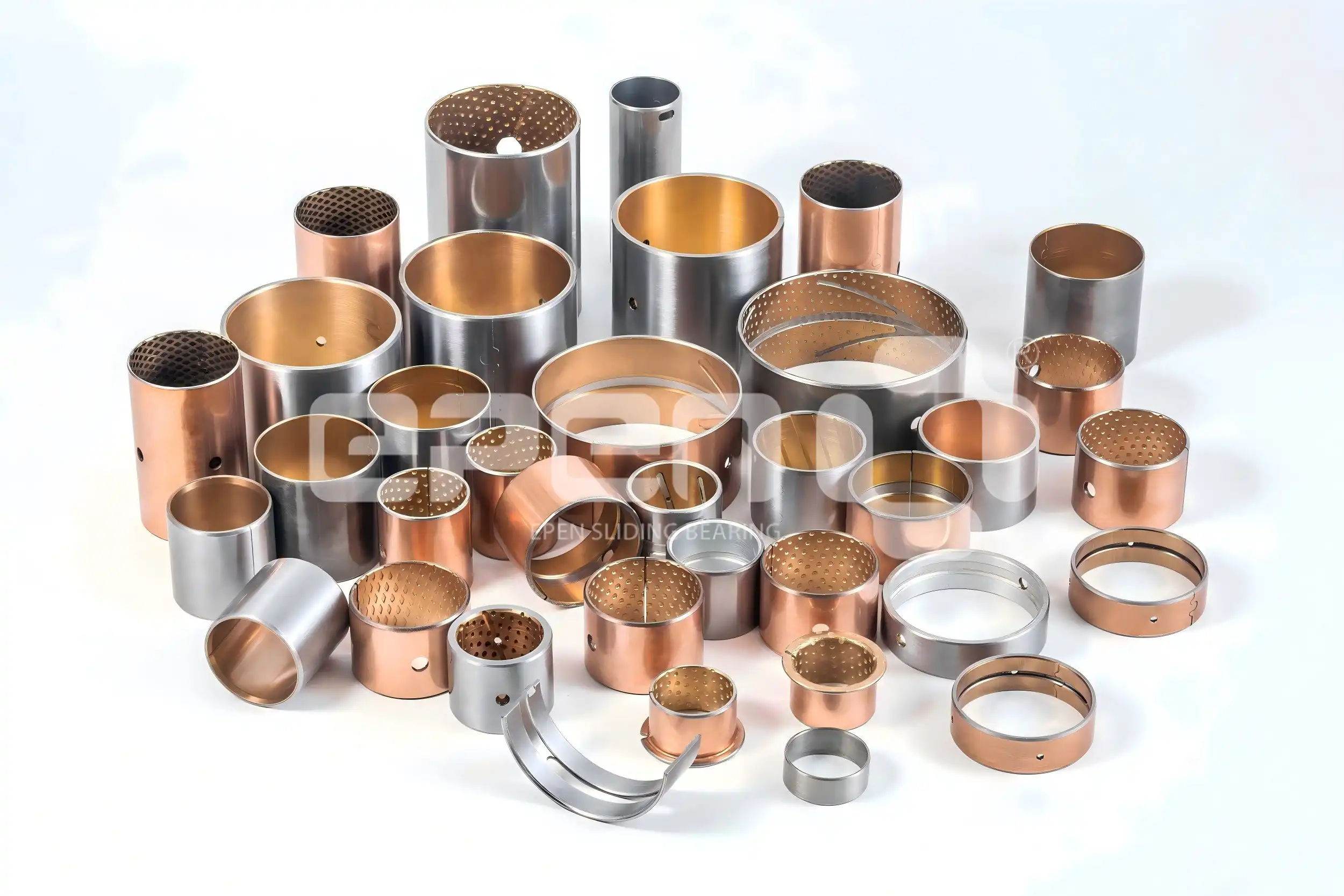
The engineering behind bimetallic bearings gets around some of the biggest problems with older bearing designs. Manufacturers make parts that can withstand very high specific loads while still being cost-effective by combining a low-carbon steel backing with a sintered or cast copper-lead-tin alloy lining. The steel layer makes the structure stiff and protects it from contact. The functional surface, which is usually made up of 10% lead, 10% tin, and copper, has great antiseizure qualities when the surfaces are oiled.
This two-layer design works really well in agricultural equipment, heavy-duty truck suspension systems, and track rollers for excavators where shock loads and oscillating motion are common. The steel backing stops fatigue fractures that would happen with solid bronze options, and the liner's pre-machined oil pockets keep the lubricant in place during long periods of time between maintenance cycles.
Critical Installation Vulnerabilities
Even though these bimetallic bearings are built to last, they can be hard to install in a way that meets performance standards. When the housing hole measurements aren't within the allowed range, they can cause uneven interference fits, which can lead to localized stress concentrations that weaken the bond between layers. When the surface of the shaft isn't as hard as it should be (usually HRC 50 or higher), lining wear speeds up, and the bearing's strategy for sacrificing wear is harmed.
During operation, changes in temperature cause the steel housing and copper alloy liner to expand and contract at different rates. If these changes in size aren't taken into account in the installation process, practical gaps could be created that cause misalignment or too much radial play. When purchasing professionals look at a supplier's skills, they should check to see if the makers offer clear installation instructions that cover these thermal issues along with standard measurement limits.
Common Installation Errors and Their Root Causes
Misalignment and Geometric Inaccuracies
Misalignment is the most common installation mistake that shortens the life of bimetallic bearings in industrial presses and construction equipment. As little as a 0.5-degree imbalance can cause uneven load distribution, which concentrates contact pressures along narrow bands of the bearing surface. This localized overloading speeds up material wear, especially in the sintered bronze layer, where too much pressure can damage the carefully designed pores that help keep the grease in.
Root causes are usually caused by not properly preparing the housing hole or checking the straightness of the shaft. When machine housings are welded or put under mechanical stress, they may develop geometric distortions that can't be seen with normal inspection methods. When shaft sections are put together without runout checks, alignment mistakes spread through the whole bearing system. Maintenance managers in mining operations say that fixing alignment problems during the initial installation stops up to 60% of bearing replacements that happen before they should in crusher feed mechanisms.
Improper Housing Preparation
Errors in housing preparation go beyond wrong measurements and include things like dirty surfaces and not following proper cleaning procedures. If there are leftover machining fluids, rust-prevention chemicals, or small pieces of dirt in bearing housings, they can ruin the interference fit that is needed to move heat away and support the structure. To move frictional heat away from the working surface, the steel backing needs to be in close touch with the housing bore. Layers of contamination create insulating walls that raise operating temperatures.
Changes in the chemical makeup of building products can also affect how well they are installed. If there is too much graphite in cast iron housings, they might not meet the interference values that are needed. Also, when using aluminum housings in farm equipment, you need to be very aware of their thermal expansion coefficients, which are very different from steel backing characteristics.
Lubrication Protocol Neglect
Misunderstandings about the term "self-lubricating" are directly responsible for many installation problems. Bimetallic bearings work with boundary lubrication, which means they need to be oiled at first and then maintained on a regular basis, unlike solid polymer dry bearings. The spherical dents and oil pockets that were machined into the liner surface act as lubricant reservoirs. This means that maintenance intervals are longer, but lubrication is still needed.
Installing teams sometimes forget to do pre-commissioning lubrication steps, which means that equipment is put into use without enough lubricant film to protect the contact surfaces. This error is especially bad during the first few weeks of breaking in, when surface irregularities are micro-polished. When marine equipment is installed in offshore cranes, it is shown that proper initial lubrication cuts break-in wear by 40% compared to dry-start conditions.
Thermal Expansion Miscalculations
During operating cycles, changes in both radial and axial bearing measurements are caused by temperature. Copper alloy liners have thermal expansion rates that are about 50% higher than steel housings. This means that as equipment gets up to working temperature, the clearance changes. When installation instructions call for interference fits at room temperature without taking thermal growth trends into account, there is a chance that too much space will form when the system is loaded.
This problem is very clear when you look at forestry equipment that has to work in temperatures ranging from below zero in the winter to very hot in the summer. If you put bearings with very little space between them when the environment is cold, they might have interference problems when the temperature rises. On the other hand, bearings with too much space between them at room temperature can handle thermal expansion, but they lose alignment accuracy during cold starts.
Principles and Best Practices for Correct Installation
Pre-Installation Verification Protocols
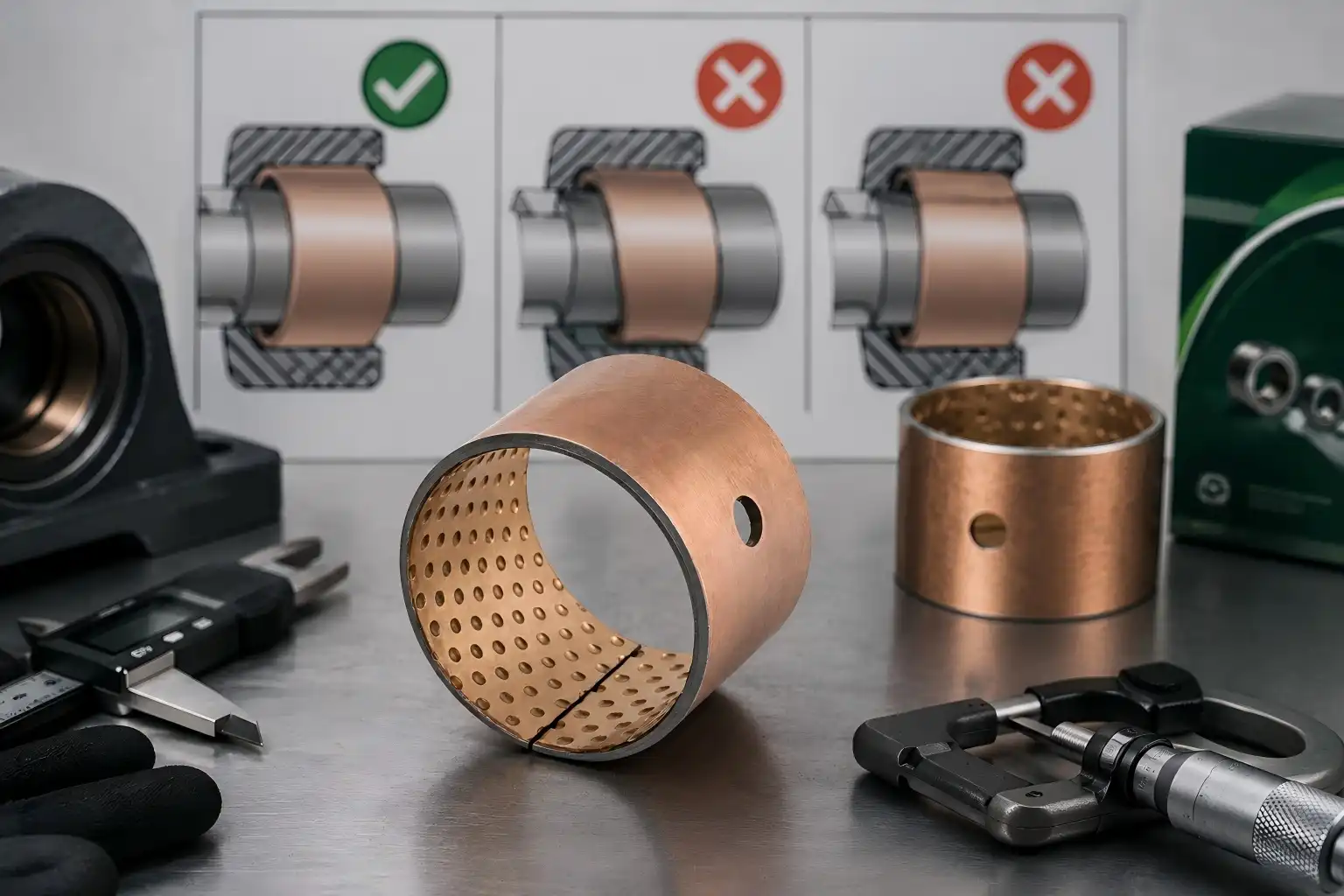
Before attempting to put something together, all of the parts and the housing must be checked carefully to make sure they work. When checking the dimensions of a bimetallic bearing, its outer diameter, wall thickness, and length should be compared to engineering plans. When using multiple bearings in an assembly, it is important to pay special attention to how the tolerances stack up. Micrometer readings check that the wall thickness is the same all the way around the circle. They find differences in manufacturing that could affect the uniformity of the press fit.
Go/no-go gauges or precision bore measurement tools that are calibrated to standard limits are needed for housing bore checking. Profilometers are used to measure the surface finish and make sure that the roughness values are within the Ra 0.8 to 1.6 micron ranges that are usually recommended for the best interference fit performance. The same level of care must be taken when preparing the shaft. Hardness tests must show at least HRC 50 values, and surface roughness tests must show Ra 0.4 to 0.8 micron finishes that balance lubricant retention against abrasive wear.
Systematic Assembly Procedures
When press-fitting, the right installation tools keep both the bearing parts and the housing structures from getting damaged. Hydraulic presses that can monitor loads can control insertion and find unusual resistance that could mean that the dimensions aren't right or that there is contamination. Precision depth stops on arbor presses make sure that the bearings are always seated evenly, without pressing too hard, which could damage the housing bores or break the brittle bearing liners.
In large-diameter uses like those found in mining equipment, temperature-assisted fitting methods lower press forces and keep component stress to a minimum. Using dry ice or liquid nitrogen to cool bearings to -40°C briefly lowers the outer diameter, which makes insertion easier with less force. On the other hand, cooking housings to 80–100°C using induction or an oven increases the size of the holes for interference fit assembly. These thermal methods work especially well for installing CuPb10Sn10 bimetallic bearings in metallurgical mills where part sizes and interference values make traditional press-fitting methods difficult.
Lubrication Application Standards
Initial lubrication practices should cover both cleaning the bearing surface and choosing the right oil for the job. Using petroleum-based solvents to clean gets rid of any protective coatings or production leftovers. Then, drying with compressed air gets rid of any solvent traces. Applying grease through oil pockets or grooves makes sure that the whole surface is covered before the shaft is put in. During assembly, any extra grease flows outward instead of building up and becoming a problem inside.
When choosing a lubricant, you need to think about the amount of load, the speed, the temperature range, and the surroundings. Heavy construction equipment pivot points usually use NLGI Grade 2 lithium complex greases with extreme pressure additives. On the other hand, lower-viscosity products that make hydrodynamic film formation easier may be needed for high-speed industrial automation applications. Marine installations need greases that are made with properties that stop corrosion and move water away from the surface to keep saltwater out.
Alignment Verification Techniques
Alignment checks after installation confirm that the assembly steps created the right geometric relationships. When you measure the dial indicator at different positions on the shaft, it can find angular misalignment. Usually, 0.001 inches of total indicator reading per inch of bearing length is considered acceptable. When accurate measuring tools aren't available or aren't possible for field installations, straightedge and feeler gauge methods can be used instead.
Dynamic alignment testing using run-in procedures with loads that get heavier over time shows problems that can't be seen with static measurement methods. Monitoring vibrations during the first few hours of operation finds resonances or beating patterns that are typical of misalignment. This lets the problem be fixed before it leads to faster wear patterns. Comparing the temperatures of the bearing surface at different points around its circumference shows that there is localized heating that is caused by geometry mistakes that concentrate the load.
Case Studies: Successful vs. Faulty Installations
Construction Equipment Pivot Point Rehabilitation
A regional excavator fleet operator had repeated failures of the boom pivot bimetallic bearings every 1,200 hours of use, which is a lot less than the 5,000 hours that the maker recommended. An investigation showed that the installation methods used impact drilling instead of controlled pressing, which caused tiny cracks in the bronze lining layer. Measurements of the housing bore showed that it was out of round by up to 0.008 inches, and tests of the shaft's surface hardness showed that some parts were not hard enough to meet the HRC 45 standard.
To fix the problem, systematic installation routines were put in place. These included reworking the housing bore to get it back to being cylindrical within 0.002 inches, hardening the shaft surface through induction processes, and installing it with a hydraulic press while keeping an eye on the force. Different types of extreme-pressure greases were used instead of general-purpose greases to lubricate things that were moving back and forth. The new systems had an average service life of 4,800 hours, which cut the cost of bearing purchases by 75% and got rid of unplanned downtime.
Industrial Press Upgrade Success
A company that makes packaging equipment switched from solid bronze hinges to bimetallic bearings to save money without lowering the level of precision needed. The first installations made too much noise and developed radial play after 500 cycles, which is not acceptable in automated production settings that need precise positioning all the time. An analysis showed that the interference fit specifications were not good enough because they didn't take into account how aluminum housings expand when they work at high temperatures.
As a result of engineering changes, room-temperature interference values were raised from 0.0015 inches to 0.0025 inches. This allowed for thermal growth while keeping practical clearances within 0.0005-inch limits. During the installation process, the case was heated up to 90°C and the bearings were cooled down to -20°C so that thermal assembly methods could be used. New installations showed that noise levels were 12 dB lower than those of their solid bronze predecessors, and the devices stayed in the same place through 50,000 cycles of endurance testing. This proved that bimetallic technology should be used across the entire product line.
Maintenance Tips to Extend Bimetallic Bearing Performance
Inspection Routines and Monitoring Protocols
Regular inspections should be set up by preventive maintenance programs based on how often the equipment is used and how harsh the operating environment is. Visual inspections reveal external corrosion, housing distortion, or lubricant leakage, which are all signs of seal degradation or contamination entry. Infrared thermography is used to keep an eye on temperatures and find patterns that could mean that there isn't enough lubrication, that the bimetallic bearings are moving out of alignment, or that the surface is wearing down before they break completely.
Through its unique frequency patterns, vibration research can spot problems before they get too bad. Broadband noise is made by worn bearings across the spectrum, while harmonics are made by imbalance at rotational frequencies. Ultrasonic methods can tell when border lubrication breaks down because there are more acoustic emissions when rough surfaces touch each other with thinner lubricant films. These condition tracking methods make it possible to switch from replacement schedules based on time to predicted maintenance plans that make the best use of bearing life.
Re-Lubrication Best Practices
Setting up the right re-lubrication times is important for protecting bearings from over-greasing risks that raise running temperatures by causing churning losses. Equipment that works in clean, moderate-temperature areas may go 2,000 hours without being greasing, but equipment that works in dirty or hot areas needs to be greased every month. Automatic oil systems give measured amounts at set times, which is especially helpful for farm equipment that works in remote fields.
Because of concerns about grease compatibility, mixing recipes with thickener chemicals that don't work well together isn't allowed because it could lead to separation or loss of stability. When switching from one type of grease to another, the bearings should be cleaned thoroughly or left empty for a long time so that the new grease can get rid of any leftover old grease. Volume rules usually say to fill oil pockets and grooves without packing all the way into the bearing gaps. This leaves room for the lube to flow and for the material to expand when it gets hot.
Supplier Partnership and Technical Support
Optimizing the performance of bearings over the long term is easier when you work together with manufacturers who offer engineering support beyond just selling goods. Reliable providers give advice on the right bearings to use, how to install them, and how to keep them in good shape based on how the equipment is used. Having access to mechanical experts can help you figure out why something is breaking down too soon by analyzing the makeup of the lining, judging the strength of the bond, and figuring out what the wear patterns mean.
Strategies for buying things should look at what suppliers can do, like designing custom bearings, making quick prototypes for retrofitting, and managing inventory in a way that supports just-in-time delivery needs. When manufacturers keep a large standard catalogue of measurements along with the ability to make custom orders, they can consolidate their supply relationships and make sure that parts are available for a wide range of equipment. The quality of technical documentation, such as installation instructions, dimensional specifications, and material certifications, shows how committed an organization is to the success of its customers after the sale is complete.
Conclusion
How well bimetallic bearings are installed affects whether they last as long as predicted or break down early, which lowers the reliability of the equipment. Steel-backed, copper-alloy-lined designs are very complicated technically, so they need just as complicated installation methods that take into account tolerances for size, temperature, and lubrication needs. When procurement professionals and maintenance engineers invest in the right tools, standardized procedures, and ongoing condition monitoring, they get big returns in the form of longer component life, less unplanned downtime, and a lower total cost of ownership. The case studies and best practices show that the quality of the installation has a bigger effect on the performance of the bearings than small differences in specifications between competing products. This shows how important it is to get training, develop procedures, and work with suppliers who care about application success rather than just making sales.
FAQ
1. What is the expected service life of properly installed bimetallic bearings?
Service life depends a lot on how much a program uses it, how fast it runs, and how well it is maintained. When installed and oiled correctly, heavy construction equipment pivot points can usually last between 3,000 and 5,000 hours of use. In controlled settings, industrial gear can last for more than 10,000 hours. In mining, where it is subjected to high levels of wear and tear and impact, bimetallic bearings usually last between 1,500 and 2,500 hours. Comparing real service life to predicted service life gives useful information about how well the installation was done and how well the maintenance was done.
2. Can existing maintenance staff perform bimetallic bearing installation, or does it require specialized training?
Basic mechanical knowledge, along with the right tools and clear instructions, is what skilled maintenance workers need to do installations that go well. For large diameter bearings that need to be assembled using heat methods or for uses that need very precise alignment limits, specialized training is very helpful. Installation guides and technical support from the manufacturer fill in gaps in knowledge, and writing down what was learned from the first installations builds institutional knowledge that will help with future maintenance tasks.
3. How do bimetallic bearings compare to solid bronze bushings in practical applications?
Bimetallic designs are cheaper (30–50%) than solid bronze versions of the same thing because they use less copper and have better shock resistance and wear strength thanks to steel backing structural support. The composite design keeps its tribological performance even when border lubrication conditions are like those found in heavy equipment that moves back and forth. Solid bronze bushings are better in very acidic environments or situations where a lot of cutting needs to be done after installation. However, most industrial uses prefer bimetallic technology because it offers better performance and lower costs.
Partner with Epen for Expert Bimetallic Bearing Solutions
With more than 20 years of experience, Jiashan Epen Bearing Co., Ltd. makes high-performance bimetallic bearings that are perfect for tough industrial uses. Our engineering team works together with procurement experts and maintenance managers to find the best bearing solutions for your equipment based on how it is used. We keep our manufacturing flexible so that we can meet both of your needs, whether you need standard catalogue dimensions for fast shipping or custom-designed bearings for specialized machines. Our full technical support goes beyond just delivering the product. It also includes help with installation, fixing problems, and suggesting ways to make the application run better. Get in touch with our team at epen@cnepen.cn to talk about your bearing needs with experts who know how to deal with problems in marine applications, construction equipment, and industrial automation. As a reliable company that makes bimetallic bearings, we welcome you to look through our large product catalogue at cn-epen.com and learn how our dedication to quality and customer satisfaction can make your equipment more reliable.
References
1. American Bearing Manufacturers Association. (2021). Bearing Installation and Maintenance Guidelines for Industrial Applications. ABMA Standards Publication.
2. Budinski, K. G., & Budinski, M. K. (2020). Engineering Materials: Properties and Selection (10th ed.). Pearson Education Technical Publishing.
3. Harris, T. A., & Kotzalas, M. N. (2019). Advanced Concepts of Bearing Technology: Rolling Bearing Analysis (5th ed.). CRC Press Taylor & Francis Group.
4. International Organization for Standardization. (2018). Plain Bearings — Quality Control Techniques and Inspection of Geometrical and Material Quality (ISO 12301:2018). Geneva: ISO Standards Catalog.
5. Neale, M. J. (Ed.). (2020). The Tribology Handbook (3rd ed.). Butterworth-Heinemann Engineering Reference Series.
6. Society of Tribologists and Lubrication Engineers. (2022). Boundary Lubrication Mechanisms in Composite Bearing Systems. STLE Technical Paper Series SP-2022-47.

Dr. Eleanor "Ellie" Penn
Dr. Eleanor "Ellie" Penn is our Senior Tribology Specialist at Epen, where she bridges the gap between deep material science and real-world engineering challenges. With over 15 years of experience in the field of sliding bearings and self-lubricating materials, she possesses a passion for solving the most complex problems of friction, wear, and maintenance. Ellie holds a Ph.D. in Mechanical Engineering with a focus on tribology. Her mission is to empower engineers and maintenance professionals with practical knowledge and best practices that extend equipment life, reduce downtime, and drive innovation. When she's not in the lab or writing, you can find her volunteering at STEM workshops to inspire the next generation of engineers. Areas of Expertise: Sliding Bearing Design, Material Selection, Failure Analysis, Preventive Maintenance, Application Engineering.
Contact to EPEN Bearing
If you have any questions please do not hesitate to call or write us.