Comparing Graphite-Embedded vs. Oil-Filled Self-Lubricating Parts
Understanding Self-Lubricating Parts: Graphite-Embedded vs. Oil-Filled
- Understanding Self-Lubricating Parts: Graphite-Embedded vs. Oil-Filled
- Performance Comparison: Benefits and Limitations
- Application Scenarios: Which Type Suits Your Needs
- Procurement Considerations and Strategic Sourcing
- How to Choose Between Graphite-Embedded and Oil-Filled Bushings
- Conclusion
- FAQ
- Partner with Epen for Your Self-Lubricating Bushing Requirements
- References
When sourcing maintenance-free bearing solutions, engineers and procurement managers face a critical choice between graphite-embedded and oil-filled self-lubricating bushings. Both technologies eliminate the need for external grease application, yet they achieve this through fundamentally different mechanisms. Graphite-embedded bushings embed solid lubricant particles directly into a bronze matrix, while oil-filled variants rely on porous sintered materials pre-saturated with lubricant that migrates to bearing surfaces through capillary action. Understanding these distinctions enables you to select components that match your equipment's load profiles, temperature ranges, and environmental conditions—ultimately preventing costly downtime and extending service intervals across excavators, packaging lines, and marine installations.
Understanding Self-Lubricating Parts: Graphite-Embedded vs. Oil-Filled
Engineers and procurement managers must choose between oil-filled and graphite-embedded self-lubricating bushings when looking for maintenance-free bearing solutions. Although both methods get rid of the need to apply grease from the outside, they do so in very different ways. Graphite-embedded bushings put solid lubricant particles right into a brass matrix. Oil-filled bushings, on the other hand, use porous sintered materials that are already loaded with lubricant and let it move to the bearing surfaces through capillary action. By knowing these differences, you can choose parts that work with the load profiles, temperature ranges, and environmental conditions of your equipment. This will help you avoid costly downtime and extend the time between service visits for excavators, packaging lines, and marine installations.
Design Principles and Operational Mechanisms
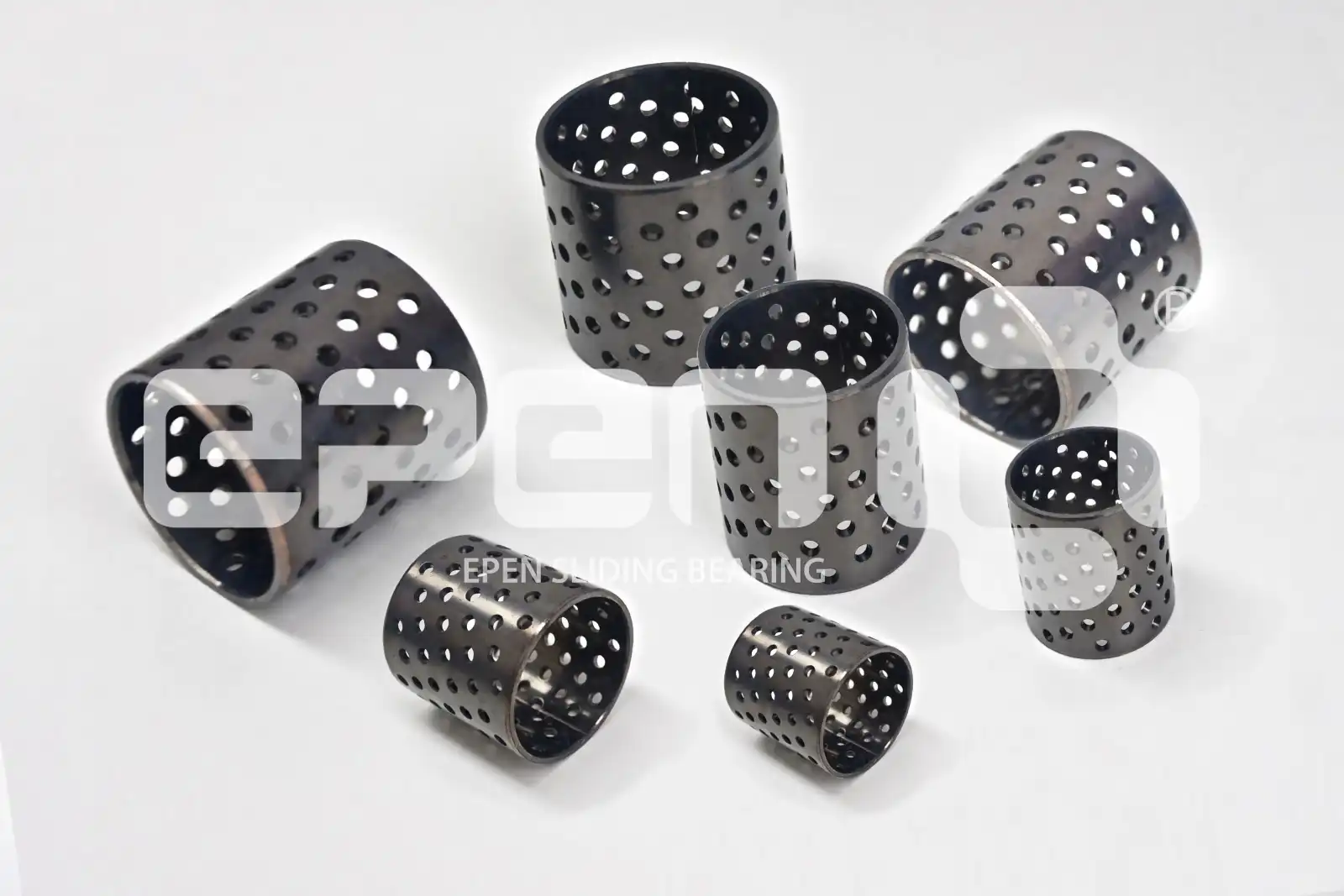
The use of graphite in bushings brings together the fields of metallurgy and tribology. Manufacturers start with high-strength bronze metals, like manganese bronze C86300, aluminium bronze C95400, or tin bronze C93200. They then carefully drill or cast pockets across the bearing surface. Solid grease plugs, usually made of graphite or molybdenum disulphide (MoS₂), are put into these pockets. When the bushing is in use, frictional heat makes the solid lubricant slightly expand and spread out across the mating surface, making a smooth, low-friction film. In moving parts, like excavator boom pivots and crane slew rings, where normal hydrodynamic oil films can't form, this system comes in very handy.
Bushings that are filled with oil work in a different way. Manufacturers make these parts with powder metallurgy, which turns bronze into sintered bronze with controlled porosity (15–25%). This porous structure works like a tiny sponge that is already filled with special bearing oil when there is no air around it. When the machine is running, the rotating shaft heats up a small area, which makes the oil expand and move to the bearing surface through holes that are linked to each other. Capillary forces pull the oil back into the porous matrix when the machine stops and cools down. This makes a self-replenishment cycle that can last for years in moderate-duty applications.
Material Composition and Manufacturing Complexity
The material science behind these devices has a direct effect on how well they work. Base alloys in graphite-embedded bushings often have a Brinell hardness of more than 210 HB and a tensile strength of more than 750 N/mm². This gives them great structural integrity under heavy static loads that are common in the undercarriages of construction equipment. Care is taken to make the solid grease plugs themselves. Pure graphite works well in dry places, resin-bonded graphite doesn't wash out in wet ones, and MoS₂ types can handle high pressures in mine settings.
Bronze metals with a lower base hardness (around 80–120 HB) are usually used for oil-filled bushings because their porous structure makes them less strong overall than cast parts. It's important to choose the right impregnating oil. Mineral oils work for most industrial machinery, synthetic polyalphaolefins (PAO) work better in hotter environments for cars, and ester-based fluids don't oxidise in high-temperature packing equipment. There are big differences in how hard each type of manufacturing is. For example, making grease pockets in graphite-embedded bushings requires more machining, while making oil-filled ones needs fine powder metallurgy control and vacuum impregnation facilities.
Performance Comparison: Benefits and Limitations
Load Capacity and Wear Resistance
Premium versions of graphite-embedded bushings can handle more weight than other types, with PV values (pressure times velocity) hitting 150 N/mm²·m/min. This makes it possible for them to work in harsh environments like crushers and metallurgical mill conveyors, where heavy loads and rough dust are common. The solid metal matrix stays stable in its shape even when it's holding up loads of several tonnes, and the lubricant that's built in keeps replacing itself at wear places. According to data from mining operations, these bushings last three to five years in jaw crusher toggle plates, while regular greased bearings only last eighteen to twenty-four months before they fail due to contamination.
When smooth operation is most important, oil-filled bushings are the best choice for low-load, moderate-speed tasks. The normal PV values for these are between 20 and 50 N/mm³·m/min. This makes them perfect for guide rails in packing machines and automatic conveyor systems that run at steady speeds. Because they make a continuous oil film, they are much quieter than graphite types. This is a big plus in places like food processing plants and electronics assembly plants that are worried about noise pollution. Under ideal conditions, wear rates are still very low. For example, after 5,000 hours of continuous rotation in controlled environments, lab tests showed less than 0.05mm of radial wear.
Temperature and Speed Tolerances
The operating temperature ranges make it clear that these systems don't work the same way. Graphite-embedded bushings work reliably from -40°C to +300°C, and special high-temperature formulations can reach 400°C for use in steel mill charging equipment and machinery for making glass. This thermal stability comes from graphite's natural qualities—as the temperature rises, it actually makes its lubricating properties better, while petroleum-based goods break down. The solid lubricant works even when temperatures change quickly, which would make liquid lubricants evaporate or oxidise.
The fluid that fills oil-filled bushings limits how hot they can get. Standard types of mineral oil can only work in temperatures between -20°C and +120°C, which means they can only be used in climate-controlled factories and mild outdoor settings. Synthetic oil formulations make this range go up to -40°C to +180°C, which means they can be used in parts of cars that deal with motion and in farm equipment that has to deal with yearly temperature changes. In contrast, a self-lubricating bushing with solid lubricant fillers can operate beyond these liquid limits, maintaining performance even when oil-based systems would fail. Long-term contact above these levels, on the other hand, causes oil to evaporate and be lost forever, leaving a structure that is weak and prone to faster wear and eventually seizure.
The speed capabilities are also very different. At speeds up to 2.5 m/s, oil-filled bushings make good hydrodynamic films, which means they can be used in conveyor rollers and light-duty rotary equipment. Graphite-embedded versions work better at slower speeds (less than 0.5 m/s), where their border lubrication system works best. They also handle oscillating and reciprocating movements that are common in construction equipment connections much better than oil-impregnated versions.
Maintenance Demands and Service Life
Compared to traditional greased bearings, both technologies promise less maintenance, but their service characteristics are different. When it comes to upkeep, graphite-embedded bushings really don't need to be replaced, adjusted, or watched over over time. This feature is very helpful in places that are hard to get to, like offshore crane pedestals and deep mine equipment that needs to be serviced during expensive production stops. As they are used for years, their solid lubricant reservoirs slowly run out. When wear reaches certain levels, the bushing needs to be replaced as a whole.
Oil-filled bearings need some upkeep, but not none at all. The self-replenishing oil system works well when the working conditions are stable. However, heavy loads or long periods of high speed can empty the oil reservoir faster than capillary action can fill it back up. During planned machine breaks, maintenance managers should check these parts for surface dryness that means oil is running low. Some designs have small holes that let you re-oil them, which extends their useful life beyond the original oil charge. Depending on the severity of the application and the environment, most parts need to be replaced every 3 to 7 years.
Application Scenarios: Which Type Suits Your Needs
Heavy Machinery and Construction Equipment
OEMs of construction equipment have to deal with harsh working conditions that push the limits of bearing technology. Excavator boom pivots have to deal with shock loads of more than 50 tonnes and are often exposed to mud, dust, and high temperatures on the job site. Graphite-embedded bushings are now the standard for these uses, and the aluminium bronze C95400 bases don't gall, which wears down softer materials. When rough particles get into the bearing interface, the solid lubricant still works. In this case, oil films would quickly break down and porous alternatives would wear out very quickly.
Graphite technology is also useful for loader bucket linkages and bulldozer blade mounts. Instead of rotating continuously, these pivot points move back and forth, which stops the formation of a hydraulic oil film. Graphite particles provide border lubrication that keeps joints moving smoothly during ten-hour shifts, without the stick-slip problems that happen in joints that aren't well oiled. Manufacturers of heavy equipment say that graphite-embedded bushings last 40 to 60 percent longer between services than standard greased bushings in these tough spots.
Industrial Machinery and Automation Systems
When it comes to packaging machinery, which has different needs, oil-filled bushings are often the best choice. The smooth and quiet operation of these parts is good for high-speed conveyor systems that keep their speeds between 1.0 and 2.0 m/s. The constant oil film lowers friction coefficients to 0.02-0.05, which lowers the power needed by the drive motor and increases belt life by lowering shaking. In clean rooms like those used in pharmaceutical and food processing plants, it's especially helpful not to have to apply grease from the outside. This is what oil-filled bushings do while still storing lubricant inside.
In some places, both methods are used by injection moulding tools and die-casting equipment. Guide pillars that hold up mould platens usually need graphite-embedded bushings that can handle the 200–250°C heat from molten metal or plastic, but oil-filled versions work just fine in peripheral automation parts that handle material transfer. Managers in charge of technical buying like that they can choose the best self-lubricating bushing for each area of use in complex machinery systems.
Environmental Factors and Customized Solutions
Exposure to dust is a very important selection factor. Mining operations that process ore, cement plants that deal with fine powders, and sawmills that make wood chips are all places where oil-filled bushings don't do well. Airborne contaminants stick to oil films that move through porous bearing surfaces and make a gritty solution that greatly speeds up wear. Graphite-embedded designs don't fail in this way because they are sealed. The solid lubricant stays safe in the drilled pockets until friction creates the heat needed to release it at the bearing surface.
Marine uses need special solutions with graphite contained in them because of worries about corrosion and moisture. Continuous exposure to saltwater breaks down common bronze alloys and washes away common greases in shipboard winch drums, rudder bearings, and deck crane slewing rings. Dezincification-resistant bronze bases and resin-bonded graphite plugs make the equipment work reliably over multiple years of maintenance, even when it's submerged in rough water for short periods of time. Marine experts choose these parts because they know they will work well without needing to be oiled all the time, which is something that greased bearings need in rough ocean conditions.
Procurement Considerations and Strategic Sourcing
Cost-Effectiveness and Total Ownership Analysis
Component upfront pricing illustrate how difficult these technologies are to create. Graphite-embedded bushings cost more due to the higher-grade brass metals required for demanding usage and the additional machining that creates lubricating gaps. The total cost of ownership favors this technology in heavy-duty applications. The extended service life, no lubrication, and fewer downtime provide considerable economic advantages over three to five years.
Oil-filled bushings are affordable for procurement teams minding their budgets. This applies notably to moderate-duty situations when their performance remains satisfactory. Costs are lower than with cast-and-machined solutions since powder metallurgy is common. Facilities with hundreds of conveyor systems or packing lines have the highest cost-performance ratio with oil-filled technology. During designated repair windows, replacement is straightforward.
Supplier Reliability and Technical Support
Manufacturers with tribology expertise may provide these specialized parts. Many long-standing suppliers have extensive testing facilities to verify performance promises in comparable scenarios. These specifications include PV limitations, temperature ranges, and shaft material compatibility. Engineers constructing new equipment or enhancing existing systems need this.
Minimum order quantities and lead times vary per supplier and product category. Regular bronze metal catalogue sizes arrive in two to four weeks, and tiny minimum quantities are suitable for prototypes and stock monitoring. Manufacturing runs of 8 to 12 weeks and larger order commitments that support tool investment are required for custom-engineered systems with specific dimension requirements, complex alloy blends, or particular lubricant formulae. Purchasers should cooperate with suppliers early in product development to meet delivery dates.
How to Choose Between Graphite-Embedded and Oil-Filled Bushings
Defining Application Parameters
A thorough record of the operating conditions is the first step in choosing the right components. Load profiles need to include both static and dynamic forces, as well as peak impact loads that are higher than the steady-state values. When material falls from the feed hoppers, it can put 2000 kg of shock loads on a conveyor idler roller that is already carrying 500 kg of load. This second number determines which bearings to use. Duty cycles, stroke lengths (for reciprocating applications), and rotational speeds all play a role in determining which technology works best.
Temperature mapping finds temperature problems that get rid of choices that aren't right. In northern regions, equipment that works outside in subfreezing temperatures solidifies regular mineral oils. In foundries, machinery works in temperatures that are higher than what infused oils can handle. Extreme temperatures don't affect graphite-embedded bushings, but procurement teams should make sure that the formulations they use are right for the temperature environment they expect. Levels of environmental contamination, such as dust concentration, moisture exposure, and chemical contact, round out the operating profile needed to make an informed choice.
Comparing Performance Metrics
Requirements for load capacity quickly rule out options. Graphite-embedded technology is needed for applications where PV values are higher than 80 N/mm³·m/min, because oil-filled versions could fail too soon in these harsh conditions. When it comes to maintenance ease, graphite types are better in hard-to-reach or remote locations where service calls cost a lot. Oil-filled bushings make equipment that needs to make less noise, like machines for cooking food, making medical devices, and putting together electronics, run more quietly. Choosing the right self-lubricating bushing ultimately depends on balancing these load, maintenance, and noise requirements.
Economically optimal decisions are made by weighing the expected service life against the cost of replacement. If a manufacturing line has to switch between different sizes of products often, it might choose cheaper oil-filled bushings that need to be replaced every 3–4 years. This is because regular production changes make it easy to replace the bearings. On the other hand, offshore drilling platforms stress maximum service intervals to avoid expensive crew mobilisation for maintenance. This is why premium graphite-embedded components last 7–10 years despite costing more at first.
Risk Mitigation and Maintenance Planning
Failure mode research shows small but significant differences between these systems. Graphite-embedded bushings usually wear down slowly, giving you advance notice through greater clearance and small noise development, so you can replace them during planned downtime. When oil levels drop to a critical level, oil-filled bushings can fail more suddenly. This is because the change from proper greasing to metal-on-metal contact happens pretty quickly, which can cause equipment to stop working without warning.
These trends of failure should be taken into account by strategic inventory management. Condition-based tracking sends replacement orders for equipment with graphite-embedded bushings when wear measures get close to certain limits. Operations that use oil-filled technology are more reliable because they have replacement schedules that make sure parts are replaced before the statistical chance of failure rises too high. Buying teams that take care of both technologies in a variety of equipment groups like it when suppliers offer full product lines that cover both choices. This makes managing vendors easier and brings together technical support relationships.
Conclusion
Matching technology strengths to application requirements is crucial when choosing between graphite-embedded and oil-filled self-lubricating bushings. Graphite-embedded versions can handle more weight, work in a wider range of temperatures, and don't need any maintenance, which is very important for heavy construction equipment, mining equipment, and marine installations that have to deal with harsh environments. Oil-filled bushings are a cheap way to fix moderate-duty industrial machinery and automation systems that need to run smoothly and quietly while keeping the environment under control. Before looking at performance specs and total ownership costs, it's important to keep detailed records of load profiles, temperature ranges, contamination exposure, and ease of maintenance access. Both technologies get rid of the long-term problems with durability and the work that comes with using traditional greased bearings. They both offer great value when they are properly matched to the needs of the application.
FAQ
1. Can graphite-embedded bushings operate effectively in high-temperature environments?
Graphite-embedded bushings work well at high temperatures, consistently from -40°C to +300°C, and some formulations can even handle temps as high as 400°C. Unlike petroleum-based lubricants, graphite's lubricating properties get better as the temperature rises. Because of this, they work great in places where regular lube doesn't work, like steel mills, glass factories, and high-temperature die casting.
2. What are typical replacement intervals for oil-filled self-lubricating components?
Depending on how they are used and how harsh the conditions are, oil-filled self-lubricating bushings usually need to be replaced every 3 to 7 years. When moderate-duty industrial machinery is used within the suggested speed and temperature ranges, it has a longer service life. On the other hand, equipment that is frequently overloaded or exposed to high temperatures may drain the oil reservoir faster, needing to be replaced more often.
3. Do these bushings require specific shaft materials for optimal performance?
Hardened steel shafts with a surface hardness of 45 to 50 HRC and a surface finish of 0.4 to 0.8 μm work best for both technologies. Softer shaft materials make bushings wear out faster, and areas that are too rough make it hard for a grease film to form. Manufacturers give detailed compatibility guidelines that list the best shaft materials and surface treatments to use so that bearings last as long as possible and don't break down early.
Partner with Epen for Your Self-Lubricating Bushing Requirements
Choosing the right self-lubricating bushing provider has a direct effect on how well your equipment works and how much it costs to run. Jiashan Epen Bearing Co., Ltd. makes a wide range of oil-filled and graphite-embedded plain bearings that are designed for tough industrial uses. We know a lot about metals and can work with aluminium bronze, manganese bronze, and other alloys that are specially made for your load and surroundings. Epen's technical teams do in-depth research of your application to help you figure out how to balance the performance benefits of graphite and oil-impregnated technologies. We offer both normal catalogue sizes and solutions that are designed to fit the exact needs of your equipment. You can talk to our engineering support team at epen@cnepen.cn about the details of your application and get product suggestions backed by detailed technical documentation, competitive lead times, and reliable delivery that keeps your production schedules on track.
References
1. Peterson, M.B. and Winer, W.O. (1980). Wear Control Handbook. American Society of Mechanical Engineers, New York.
2. Neale, M.J. (1995). The Tribology Handbook (Second Edition). Butterworth-Heinemann, Oxford.
3. Khonsari, M.M. and Booser, E.R. (2008). Applied Tribology: Bearing Design and Lubrication (Second Edition). John Wiley & Sons, Chichester.
4. Hutchings, I.M. and Shipway, P. (2017). Tribology: Friction and Wear of Engineering Materials (Second Edition). Butterworth-Heinemann, Oxford.
5. ASM International Handbook Committee (1992). ASM Handbook Volume 18: Friction, Lubrication, and Wear Technology. ASM International, Materials Park, Ohio.
6. Budinski, K.G. and Budinski, M.K. (2010). Engineering Materials: Properties and Selection (Ninth Edition). Prentice Hall, Upper Saddle River, New Jersey.

Dr. Eleanor "Ellie" Penn
Dr. Eleanor "Ellie" Penn is our Senior Tribology Specialist at Epen, where she bridges the gap between deep material science and real-world engineering challenges. With over 15 years of experience in the field of sliding bearings and self-lubricating materials, she possesses a passion for solving the most complex problems of friction, wear, and maintenance. Ellie holds a Ph.D. in Mechanical Engineering with a focus on tribology. Her mission is to empower engineers and maintenance professionals with practical knowledge and best practices that extend equipment life, reduce downtime, and drive innovation. When she's not in the lab or writing, you can find her volunteering at STEM workshops to inspire the next generation of engineers. Areas of Expertise: Sliding Bearing Design, Material Selection, Failure Analysis, Preventive Maintenance, Application Engineering.
Contact to EPEN Bearing
If you have any questions please do not hesitate to call or write us.