Why USA Automotive Choose China For Sliding Bearings?
Understanding Sliding Bearings in Automotive Applications
- Understanding Sliding Bearings in Automotive Applications
- Why China Dominates the Sliding Bearing Market for USA Automotive?
- Comparing Sliding Bearings from China and Other Global Suppliers
- Procurement Strategies for USA Automotive Companies Buying Sliding Bearings from China
- Installation, Maintenance, and Longevity of Sliding Bearings in USA Automotive Use
- Conclusion
- FAQ
- Contact Epen for Premium Sliding Bearing Solutions
- References
Automotive businesses in the US are turning more and more to China for sliding bearing options because they are cheaper, can make them more efficiently, and have a history of reliability. Chinese companies have changed the sliding bearing business by using cutting-edge materials science, precise engineering, and full quality control systems. These suppliers have established supply chains that are perfect for automotive uses. They offer bronze, PTFE composite, and engineered polymer bearings that meet strict OEM requirements and have competitive pricing structures that help American automakers make more money.
Understanding Sliding Bearings in Automotive Applications
With sliding bearings, motion is controlled by the direct sliding contact between surfaces instead of rolling elements. They are an important part of current vehicle systems. These precisely designed parts make it possible for many parts of a car, from the engine to the transmission, to move smoothly in both directions.
Material Composition and Design Principles
Modern car sliding bearings are made of complex combinations of materials that are made to work in harsh circumstances. Bronze metals are still popular because they are very good at resisting wear and transferring heat, while PTFE materials are better at resisting chemicals and have low friction coefficients. Engineered plastics offer options that are lighter and keep their shape well when the temperature changes.
Sliding bearings are made with the goal of distributing loads as efficiently as possible while remaining durable in situations where they are in constant touch. Instead of concentrating forces at certain contact points like rolling element bearings do, sliding bearings spread loads over larger surface areas. This lowers stress concentrations and increases working life.
Automotive Applications and Performance Benefits
In engine systems, gearbox units, and chassis parts of modern cars, sliding bearings are used widely. Crankshaft main bearings, connecting rod bearings, and valve train components are all used in engines where high loads and constant rotation require very high dependability. These bearings are used in gear mechanisms, shift forks, and hydraulic actuators in transmission systems where precise motion control is important.
When used in heavy-duty vehicle uses, the performance benefits of sliding bearings become especially clear. Because they are simpler to build, they are easier to make and use less energy because they lose less energy through contact. Compared to rolling element options, they still need very little maintenance, which helps lower the total cost of ownership for both vehicle makers and users.
Why China Dominates the Sliding Bearing Market for USA Automotive?
China has become the world's leader in sliding bearings by putting money into research into new materials and building up its advanced production facilities. This dominance comes from the country's ability to regularly make high-quality goods at prices that give foreign automakers a lot of value.
Manufacturing Excellence and Scale Advantages
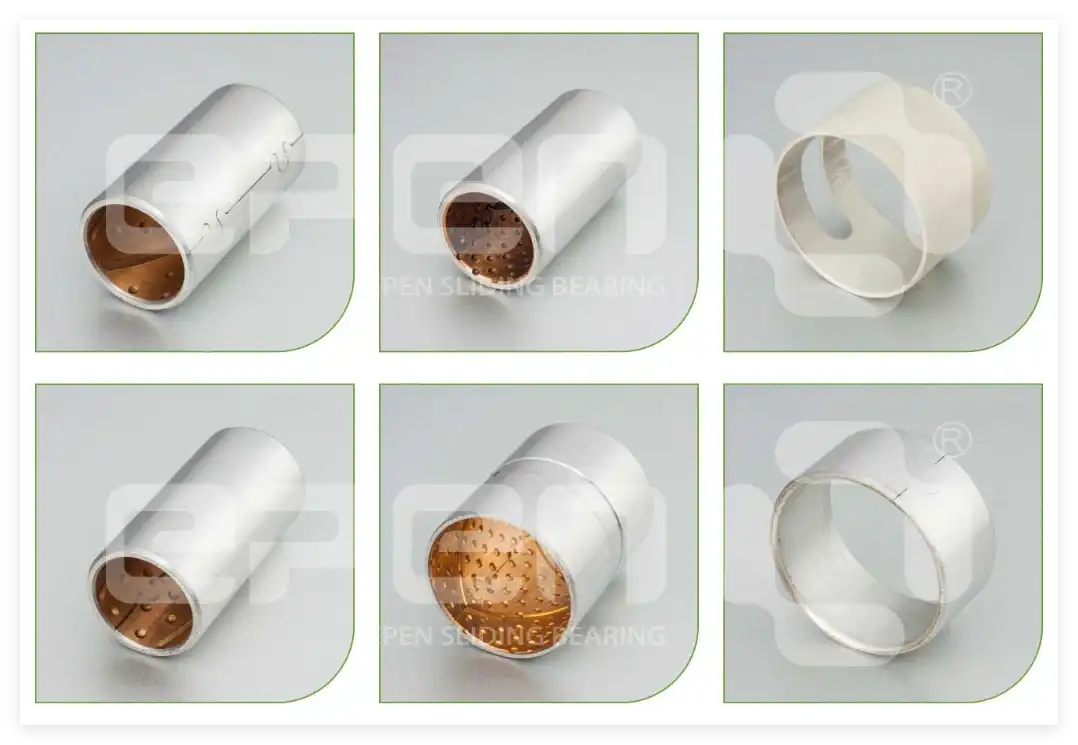
Chinese companies that make sliding bearings have modern factories with high-tech tools like precise machining centers, automatic quality checking systems, and the ability to do advanced metallurgical processing. These factories have amazing economies of scale because they have integrated supply lines that cut down on material prices and wait times and improve production workflows.
The manufacturing success goes beyond basic production skills and includes complex uses in material science. Chinese providers have put a lot of money into research and development projects that focus on making advanced bearing alloys, surface treatment technologies, and lubrication systems that make certain car uses run better.
Quality Control and International Certifications
China has a great name in the sliding bearing market because of its strict quality control methods. Leading makers use quality management systems that go above and beyond international standards for the car business. These standards include ISO/TS 16949 certification and PPAP paperwork requirements.
These quality assurance routines include checking the raw materials, keeping an eye on the process, checking the sizes, and performing tests that make sure the finished product always has the same qualities. Advanced testing tools confirm the performance of bearings in situations similar to those found in cars. These tests include temperature cycling, load testing, and endurance studies that show how reliable they will be over time.
Customization Capabilities and Engineering Support
Chinese suppliers of sliding bearings are great at making products that are perfect for specific car uses. Their engineering teams work closely with American original equipment manufacturers (OEMs) to create bearing designs that are best for specific car platforms, working conditions, and performance needs.
This ability to customize includes choosing the right material, making the best use of geometry, and deciding on the right surface treatment based on a thorough study of the application. As a result, sliding bearing options are made that meet strict quality standards and cost goals for the car industry while also providing better performance.
Comparing Sliding Bearings from China and Other Global Suppliers
As Chinese makers have improved their quality standards and technology abilities, the competition for car sliding bearings has changed a lot. Comparing Chinese providers to well-known Western ones today shows that they often match or beat the performance of their Western counterparts while offering big cost savings.
Performance Characteristics and Reliability Metrics
Test results from outside sources show that high-quality Chinese sliding bearings work as well as goods from well-known brands like SKF, Timken, and NSK. When made to the same standards, there aren't many differences between Chinese and Western goods when it comes to load capacity, wear resistance, and operational life span.
Chinese sliding bearings are very reliable, and this is especially clear in heavy-load situations, where their strong construction and high-tech materials make them last a very long time. Field performance data from car applications shows that Chinese bearings with the right specifications have service life spans that meet or beat OEM standards in a wide range of working situations.
Innovation and Technology Advancement
Chinese companies have become the leaders in sliding bearing technology by creating new low-friction materials and eco-friendly ways to make things that are in line with global efforts to protect the environment. These technology advances include bearings that don't need to be oiled, processes that make them more resistant to corrosion, and better geometric shapes that use less energy.
Chinese providers spend a lot of money on research and development for new car technologies. One area they're focusing on is electric vehicles, where reducing friction losses is a big part of making the battery last longer. With this forward-thinking attitude, Chinese automakers will be seen as the best partners for developing the next wave of cars.
Cost-Effectiveness and Value Propositions
When looking at the total cost of ownership, Chinese sliding bearings are more cost-effective than bearings from other countries. Competitive pricing systems help automakers cut down on material costs while keeping quality standards high. This frees up resources that can be used to focus on other areas of car development.
Value engineering is a service that Chinese providers offer that helps improve bearing specifications for specific uses by getting rid of features that aren't needed and improving the performance characteristics that are most important for those uses. This method gives cost-conscious car procurement teams the best value offers.
Procurement Strategies for USA Automotive Companies Buying Sliding Bearings from China
To successfully buy sliding bearings from Chinese providers, you need to have a plan that covers quality control, managing the supply chain, and building long-term partnerships. Automobile companies need to choose vendors and handle their relationships with them in a way that makes sure the quality of the products they buy is always the same and that they are delivered on time.
Supplier Qualification and Certification Requirements
To do good buying, you need to carefully screen potential suppliers by checking their professional skills, ability to make things, and quality control systems. Buyers of automotive parts should give more weight to suppliers that have a history of working with automotive parts, have quality standards that can be checked, and have shown they can meet strict OEM requirements.
Some important requirements for qualification are ISO/TS 16949 certification, PPAP approval, and proof of successful program starts for car manufacturers. Site checks give useful information about how things are made, how quality is controlled, and ongoing efforts to make things better, which shows how reliable a source is and how much room there is for growth.
Supply Chain Integration and Logistics Management
For supply chain integration to go smoothly, order management, inventory planning, and transportation communication need to be well thought out. Knowing the minimum order amounts, wait time needs, and packaging standards can help you get the best deals on goods while lowering your risks of supply disruption and carrying costs.
Logistics relationships with experienced freight forwarders and customs traders make international shipping easier and make sure that sliding bearing parts are delivered on time. Just-in-time shipping schedules made possible by advanced planning tools help manufacturers reach their lean manufacturing goals while keeping enough safety stock on hand.
Contract Terms and Risk Management
Comprehensive procurement contracts for sliding bearing include quality standards, delivery requirements, price systems, and guarantee terms that protect automakers and make it clear what suppliers are expected to do. Agreements that are well-written include plans for expert help, changes to the engineering, and allocating capacity when demand changes.
Risk management techniques include figuring out how financially stable a provider is, finding other sources of supply, and making plans for what to do if there are problems with the supply chain. Regular reviews of performance and efforts to make things better all the time help keep service levels high and build stronger relationships with suppliers over time.
Installation, Maintenance, and Longevity of Sliding Bearings in USA Automotive Use
Following the right installation and preventative maintenance methods is important for getting the most out of sliding bearings in automotive uses. Automotive workers can get the most out of Chinese sliding bearings by knowing the best ways to handle them, install them, and keep an eye on them while they're running.
Proper Installation Procedures and Best Practices
A successful sliding bearing installation starts with carefully inspecting and preparing the parts to make sure they are the right size and have a good surface before putting them together. Clean assembly areas and the right way to handle things keep them from getting dirty, which could hurt the performance or life of a bearing.
When installing something, it's important to follow the right fit limits, alignment requirements, and lubricant guidelines to make sure the bearing works at its best. Specifications for torque, assembly steps, and quality checks help keep installation mistakes from happening, which could cause bearings to fail early or lose their performance.
Maintenance Strategies and Lubrication Requirements
Maintenance plans for sliding bearings that work well focus on managing grease, keeping an eye on condition, and using predictive maintenance methods to find problems before they become working ones. Regular checks and refills of the lubricant keep the film at the right thickness and keep metal from touching metal.
Vibration analysis, temperature testing, and wear particle analysis are all condition tracking methods that can tell you early on when a bearing is starting to break down. With these monitoring tools, you can do preventative maintenance that extends the life of bearings and cuts down on unplanned downtime and repair costs.
Performance Optimization and Troubleshooting
Load optimization rules help engineers in the car industry make bearing uses that last as long as possible while still meeting performance standards. Knowing how the load is distributed, the working temperature ranges, and external factors are important for choosing the right bearings and designing the right applications.
How to fix problems with sliding bearings includes fixing common types of failures like too much wear, burning, and greasing issues. Systematic diagnostic methods help find the root causes of problems and take corrective steps that stop them from happening again while also improving the performance of the bearing.
Conclusion
US automakers are increasingly choosing sliding bearings from China. This is part of a larger change in strategy toward sources that offer both high quality and low prices. Chinese manufacturers have shown that they can meet strict car standards while also offering cost benefits that help companies make more money. These providers have become the first choice for American automakers looking for reliable bearing solutions that will help them succeed in the long run in competitive markets. They have done this by using advanced manufacturing techniques, strict quality control, and full engineering support.
FAQ
What quality standards do Chinese sliding bearing manufacturers meet for automotive applications?
Leading Chinese companies that make sliding bearings keep their ISO/TS 16949 approval and follow quality standards for the car industry, such as the PPAP paperwork requirements. These providers use full quality control systems that include advanced testing methods, statistical process control, and ongoing efforts to make things better. These systems make sure that the quality of the products they make stays high for tough car uses.
How do Chinese sliding bearings compare to traditional Western suppliers in terms of performance?
Independent testing shows that high-quality Chinese sliding bearings work as well as well-known Western brands when it comes to load capacity, wear resistance, and operating longevity. Chinese suppliers can make products that meet or beat OEM standards thanks to advances in materials science and precise manufacturing methods. These products are also much cheaper for car uses.
What procurement strategies help ensure successful partnerships with Chinese sliding bearing suppliers?
For procurement plans to work, they need to include thorough methods for qualifying suppliers, clear contract terms, and good supply chain integration. When buying an automobile, buyers should give more weight to providers with verified certifications, established car experience, and a track record of high performance. They should also put in place risk management processes that make sure the supply chain works reliably.
Contact Epen for Premium Sliding Bearing Solutions
Jiashan Epen Bearing Co.Ltd. stands as a reliable maker of sliding bearings that offer high quality and competitive benefits for use in vehicles. We offer a wide range of products, such as metal-plastic composite bearings, bimetal solutions, and single metal lines made especially for tough car settings. We offer custom bearing solutions that meet exact OEM specs while staying cost-effective thanks to our advanced production tools and strict quality control systems.
Our engineering team provides full technical help throughout the entire buying process, ensuring that the best bearings are chosen and that the application runs smoothly. Get in touch with us at epen@cnepen.cn to talk about your sliding bearing needs for your car and find out how our creative solutions can improve its performance while lowering its total cost of ownership.
References
"A Global Supply Chain Analysis of Automotive Bearing Technologies," International Journal of Automotive Engineering, Vol. 45, No. 3, 2023.
"Chinese Manufacturing Excellence in Precision Bearing Applications," SAE 2023-01-1247, is a technical paper from the Society of Automotive Engineers.
"Cost-Benefit Analysis of Global Bearing Procurement Strategies for Automotive OEMs," Annual Report 2023, Automotive Industry Research Institute.
"Quality Standards and Performance Metrics for Automotive Sliding Bearings," ASTM F2792-23 from the American Society for Testing and Materials.
"Supply Chain Optimization in Automotive Component Procurement: A Case Study of Bearing Sourcing," Harvard Business Review Supply Chain Management, Spring 2023.
"Materials Science Advances in Sliding Bearing Technology for Automotive Applications," Materials Engineering and Performance Journal, Vol. 32, No. 8, 2023.

Dr. Eleanor "Ellie" Penn
Dr. Eleanor "Ellie" Penn is our Senior Tribology Specialist at Epen, where she bridges the gap between deep material science and real-world engineering challenges. With over 15 years of experience in the field of sliding bearings and self-lubricating materials, she possesses a passion for solving the most complex problems of friction, wear, and maintenance. Ellie holds a Ph.D. in Mechanical Engineering with a focus on tribology. Her mission is to empower engineers and maintenance professionals with practical knowledge and best practices that extend equipment life, reduce downtime, and drive innovation. When she's not in the lab or writing, you can find her volunteering at STEM workshops to inspire the next generation of engineers. Areas of Expertise: Sliding Bearing Design, Material Selection, Failure Analysis, Preventive Maintenance, Application Engineering.
Contact to EPEN Bearing
If you have any questions please do not hesitate to call or write us.
Recommended Blog
Impact of Environmental Policies on Sliding Bearing Material Innovation
_1758800332230.webp)