What Is EB65? A Deep Dive into Solid Lubricant-Embedded Bearings
Understanding EB65 Bearings: Specifications and Technical Details
- Understanding EB65 Bearings: Specifications and Technical Details
- EB65 Bearing vs. Other Bearings: A Comparative Analysis for Procurement Decisions
- Procurement Guide: How to Buy EB65 Bearings Efficiently
- Maintenance and Longevity: Maximizing EB65 Bearing Lifespan
- Why Choose Solid Lubricant-Embedded EB65 Bearings
- EB65 Alloy International Code
- FAQ
- Partner with Epen for Reliable EB65 Bearing Solutions
- References
When machinery operates under extreme loads, high temperatures, or contaminated environments, traditional lubrication systems often fall short. The EB65 sliding bearing addresses these challenges through its innovative design, which integrates solid lubricant materials directly into the bearing structure. This self-lubricating technology eliminates the need for constant grease application or oil circulation, making EB65 bearings particularly valuable in heavy machinery, mining equipment, and marine applications where maintenance access is limited and reliability is non-negotiable. Understanding this technology can transform how procurement teams approach bearing selection.
Understanding EB65 Bearings: Specifications and Technical Details
Core Design Philosophy
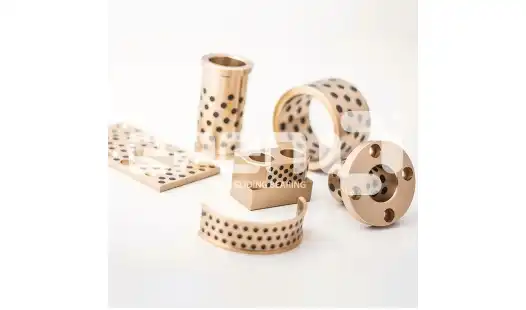
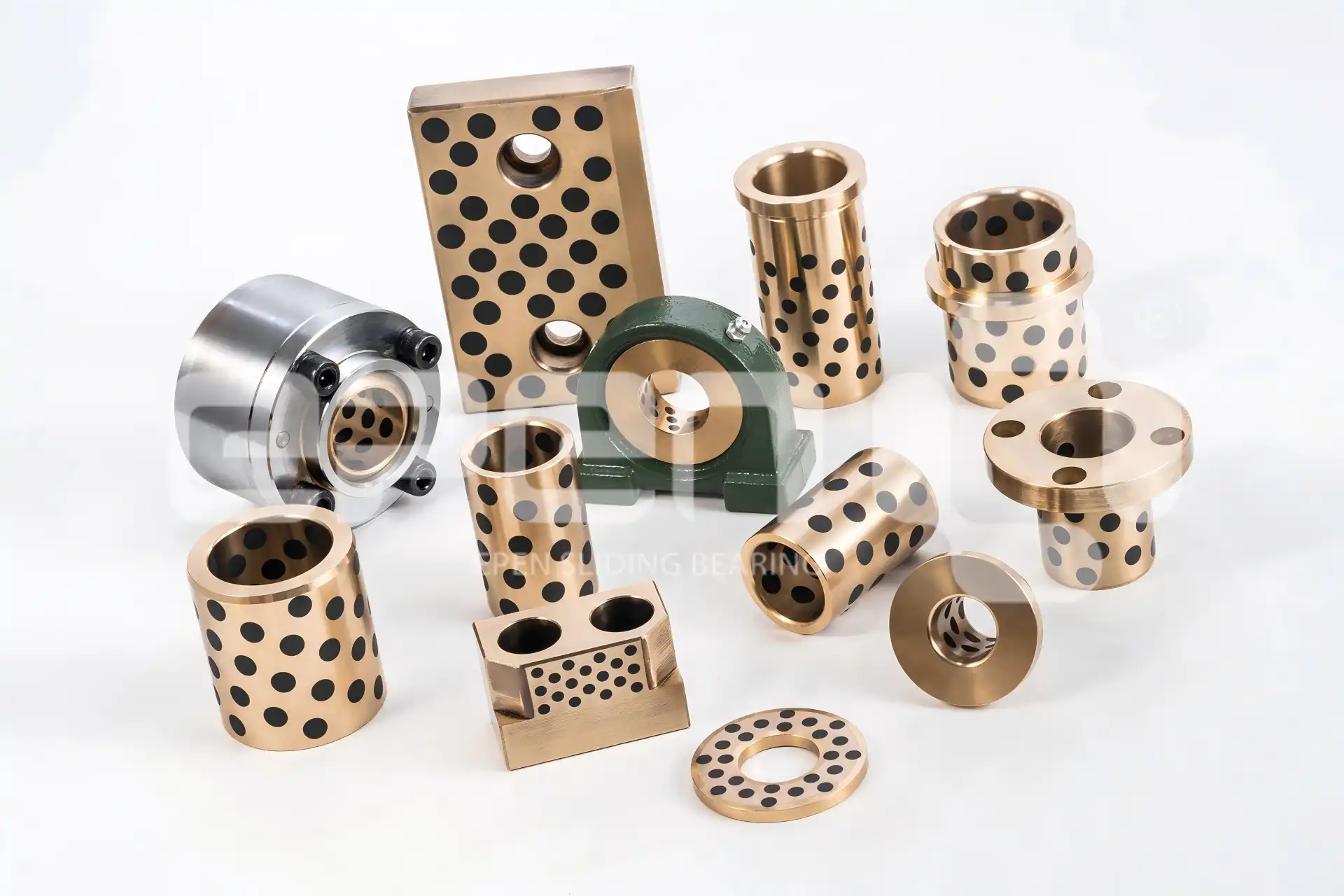
It is made of a metal-plastic composite, and the EB65 bearing is designed to work in harsh industrial environments. Instead of using outside lubrication systems like most bearings do, this design embeds solid grease mixtures into a bronze or steel backing material. During use, these lubricants move to the bearing surface through tiny holes. They form a protective film that stays in place and lowers wear and friction. This mechanism works especially well in pivot points for building equipment, mining crushers, and joints in farming machinery, where dust would quickly break down regular greases.
Material Composition and Structure
At Epen, we use a multi-layer construction to make EB65 bearings. The backing is usually made of low-carbon steel, which gives it strength, and an intermediate layer of porous bronze is fused to the base. This bronze matrix has particles of graphite, molybdenum disulfide, or PTFE spread out all over it. These solid lubricants are mixed into the top layer at amounts that are best for the load conditions. This design lets the bearing handle radial loads higher than 140 MPa while keeping a friction coefficient below 0.15, even when it's not oiled from the outside.
Dimensional Standards and Load Capacity
EB65 bearings come with bore diameters ranging from 20mm to 300mm, which can fit shaft sizes that are common in marine winches, conveyor rollers, and excavator booms. Depending on the load, wall thicknesses are usually between 2 mm and 8 mm. The bearings work very well when oiled at the boundary, and their static load ratings make them suitable for use in crane slew rings and bulldozer track systems. The temperature ranges for operation are from -40°C to +280°C, which includes uses like arctic mining and equipment in metallurgy that is exposed to radiant heat.
Service Life Expectations
If they are placed correctly, EB65 bearings can work for more than 10,000 hours in high-load situations. In mining equipment, these bearings have been shown to last three times longer than standard oil-impregnated bushings. Unlike grease-packed alternatives that lose their effectiveness over time due to lubricant degradation and contamination, the embedded lubrication system stays effective throughout the life of the bearing. This means that equipment operators will have less downtime and OEM manufacturers will have lower total cost of ownership.
EB65 Bearing vs. Other Bearings: A Comparative Analysis for Procurement Decisions
Comparing Solid Lubricant Technology to Rolling Element Bearings
Deep groove ball bearings, like the 6205 and 6305 series, work best in clean environments where they need to work at high speeds. But these designs for moving elements need to be oiled all the time and can't handle the shock loads or edge loading that are common in building equipment. The EB65 bearing works in a very different way because it uses moving contact parts instead of rolling ones. This makes it naturally more resistant to shock and able to handle being out of alignment by up to 1.5 degrees without losing any performance. Solid lubricant bearings are clearly better than sealed ball bearings in excavator arm joints where there is regular angular movement and dust contact.
Performance Against Traditional Bushings
When the load is high and the speed is slow, standard bronze bushings are usually the best choice. Even though they are cheap at first, these parts need to be greased regularly because the joints can get clogged or broken in harsh settings. The maintenance burden is especially hard on farming equipment that works in heavy soil or on mining equipment that is exposed to rough particles. EB65 bearings get rid of this need for care completely and offer better resistance to wear. Field data from makers of forestry equipment shows that repair intervals were increased by 400% when solid lubricant-embedded bushings were used instead of standard ones.
Brand Comparison Considerations
When procurement teams are looking at bearing options, they often look at products from well-known companies like NSK, SKF, and Timken. These businesses make great rolling element bearings that have been used successfully in precise applications in the past. For plain bearing uses that need to be self-lubricating, however, makers like Epen only work on improving sliding bearing technology. Our hard work studying metal-plastic alloys and solid lubricant spread has led to the creation of unique material formulations that solve problems in certain industries. Because we're experts in this area, we can give detailed advice that fits the specific needs of heavy machinery uses.
Procurement Guide: How to Buy EB65 Bearings Efficiently
Identifying Qualified Suppliers
Verifying the supplier is the first step in buying EB65 bearings that work. Real makers keep quality certifications like ISO 9001 and have the metallurgical testing tools needed to make sure the features of the materials are correct. When you contact possible suppliers, ask for information on the materials they use, data from load tests, and case studies from similar applications. Epen gives you detailed technical data sheets and can send you sample bearings to test in your specific operating conditions before you commit to large orders.
Technical Specifications for Quotation Requests
Accurate specifications keep expensive mistakes from happening when bearing capabilities don't match up with application needs. When you ask for a quote, you should include the shaft diameter, the housing bore dimensions, the bearing length, the expected radial load, the operating temperature range, and any environmental factors like chemical or water contact. Bearing experts can suggest the best material choices by hearing about the application. A company that makes shipping machinery recently called us with general size needs, and we found that a changed graphite concentration would greatly increase the bearing life in their high-cycle application.
Volume Purchasing Strategies
When you commit to buying a lot, the costs of buying things go down a lot. When order quantities go above minimum levels, manufacturers can get the most out of their production runs and material sources. Setting up a supply deal with predictable amounts not only lowers unit prices, but it also lets sellers keep inventory just for your needs, cutting wait times from weeks to days. Manufacturers of construction equipment tell us how many bearings they will need each year for all of their different lines, allowing us to make common sizes ahead of time and send them just in time for their assembly plans.
International Shipping and Logistics Considerations
When people in North America and Europe buy from Asian makers, supply chain problems can be avoided by knowing how logistics work. Usually, it takes 18 to 25 days for sea freight to get from China to ports on the US West Coast. Air freight cuts arrival time to 5–7 days, but it costs a lot more. When orders don't fill up whole containers, combining containers with other parts can save money on freight costs. To make sure that cross-border transactions go smoothly, we help foreign clients with export paperwork, harmonized tariff classification, and customs clearance processes.
Maintenance and Longevity: Maximizing EB65 Bearing Lifespan
Installation Best Practices
Proper fitting is the most important factor in determining how well and how long a EB65 bearing lasts. Depending on the hole width, EB65 bearings need to be press-fitted into housings with interference fits that are usually between 0.02mm and 0.08mm. Too much interference can block the pores and stop the lubricant from moving, but not enough interference lets the bearing turn inside the housing, which leads to fretting wear. We suggest that you use hydraulic presses with load monitoring instead of methods that use impact. The bearing surface should stay clean and free of installation waste, since dirt and dust created during assembly can make abrasive bits that wear faster.
Inspection and Monitoring Protocols
Even though EB65 bearings don't need to be oiled on a regular basis, they can still be inspected on a regular basis to help with predictive maintenance plans. During routine maintenance, a visual inspection can reveal unusual wear patterns that point to problems with alignment or overloading. Creating strange noises is often a sign of problems that are starting to happen before they become complete failures. A dull grinding sound usually means that the surface is dirty or that the lubrication film isn't developing properly. On the other hand, squeaking sounds could mean that water is getting into the solid lubricant compounds and affecting them. Thermal imaging can find high bearing temperatures that are caused by too much load or not enough space between the bearings.
Common Issues and Troubleshooting
When EB65 bearings don't work as well as expected, it's usually because the application conditions were worse than what was planned. If there is early wear on one edge, it means that the shaft and hub are not lined up properly, which is beyond the bearing's ability to fix itself. If the bearing surface wears out quickly and evenly, it means that the load is too high for the material or the bearing is too short for the load. A mining equipment user recently had a bearing fail very quickly. An analysis found that this was caused by hydraulic system pressure spikes that put three times the bearing's rating of load on it at once. The problem was fixed by fixing the hydraulic problem and changing to a higher-capacity bearing standard.
Advice on how to store and handle
When stored properly, EB65 bearings that have not been used will keep working perfectly forever. The bearings should stay in their protective packaging until they are installed so that the surface doesn't get dirty or wet. The temperature should stay between 5°C and 35°C, and the relative humidity should be less than 70%. Solid lubricant bearings don't have any chemicals that break down over time, while rolling element bearings with grease packing can split or harden after being stored for a long time. Because they are stable, they are perfect for keeping spare parts on hand for equipment in remote areas where getting replacements quickly is important.
Why Choose Solid Lubricant-Embedded EB65 Bearings
Operational Advantages in Demanding Environments
The best thing about EB65 bearing technology is that it doesn't need any outside lubrication systems. In offshore crane applications, salt spray and moisture make grease fittings useless within months. Solid lubricant bearings, on the other hand, keep working for many years between service intervals. Solid lubricants keep their friction properties the same across a wide range of temperatures, so construction equipment that works in sub-zero temperatures doesn't have to deal with the lubricant viscosity problems that normal bearings do. These benefits are even greater when more than one difficult factor is present, like when agricultural equipment is exposed to dust, water, and shock loads at the same time during harvest operations.
Environmental and Safety Benefits
Getting rid of grease and oil from bearing systems makes the workplace safer and lowers the risk of polluting the environment. Heavy machinery that works near waterways or ecosystems that are sensitive does better with protected bearings that don't leak grease into the environment. Slip risks caused by grease guns and lubricant spills around machines are cut down in factories. The less frequent maintenance also protects technicians from pinch points and the need to work at heights to reach bearing locations. As businesses put more emphasis on operational efficiency, safety, and sustainability, these factors are becoming more and more important in their purchasing choices.
Cost Analysis and Return on Investment
Even though EB65 bearings usually cost more at first than normal bronze bushings, the total cost of ownership calculations show that they are much more cost-effective in the long run. A company that makes mining equipment wrote down their cost comparison for an installation of a crusher that needed 48 bearings. For old-fashioned bushings, they needed to be greased every 80 hours of use, which took 15 minutes per bearing and 12 hours of work each month. Over the course of three years, the cost of maintenance labor was eight times higher than the difference in price between bearing types, not including the time lost for maintenance or the cost of replacing bearings too soon. During the evaluation time, the EB65 bearings worked without any problems, which proved that the investment choice was a good one.
Industry Applications and Success Stories
Solid lubricant bearings are now the best choice for critical pivot points and articulation joints in the heavy machinery industry. Manufacturers of excavators use these bearings in links between the boom and the arm, which can't be oiled easily because the parts have to be taken apart a lot. They are used by crane builders in slew ring assemblies and outrigger mechanisms. Offshore platform workers depend on solid lubricant technology for winch systems and deck tools that are constantly sprayed with salt water. Each use case shows how embedded lubrication technology fixes problems in certain industries while making operations simpler.
EPEN EB65 Main Base Alloy
| Phy. Performance. & Chemical Compositions |
CuZn25Al6FeMn3 EB65 |
CuZn25Al6FeMn3 EB66 |
CuSn5Pb5Zn5 EB85 |
CuAl10Ni EB80 |
CuSn12 EB88 |
Cast Iron HT250 EB00 |
| Cu% | 65 | 65 | 85 | 80 | 88 | |
| Sn% | 5 | 12 | ||||
| Pb% | 5 | |||||
| Zn% | 25 | 25 | 5 | |||
| Ni% | 5 | |||||
| Al% | 6 | 6 | 10 | |||
| Fe% | 5 | |||||
| Mn% | 4 | 4 | ||||
| Dengity g/cm 3 |
8.0 | 8.0 | 8.8 | 8.3 | 8.8 | 7.3 |
| Hardness | >210 | >180 | >70 | >150 | >80 | >160 |
| Tensile Strength | >750 | >550 | >200 | >500 | >360 | >250 |
| Elongation | >12 | >12 | 15 | >10 | >8 | |
| Coeicient of linear expansion |
1.9·10 -5 /℃ | 1.9·10 -5 /℃ | 1.8·10 -5 /℃ | 1.6·10 -5 /℃ | 1.8·10 -5 /℃ | 1.0·10 -5 /℃ |
| Limit Temp. | 300~400 | 300~400 | 400 | 400 | 400 | 400 |
| Max. Load N/mm 2 | 100 | 80 | 60 | 50 | 70 | 10 |
| Max. Speed m/min | 15 | 15 | 10 | 20 | 10 | 15 |
| Max. PV N/mm2·m/min | 200 | 200 | 200 | 200 | 200 | 40 |
| 400N/mm2 | <0.01 | <0.01 | <0.05 | <0.04 | <0.05 | <0.015 |
Friction of coe. Oil 0.03; Dry 0.16
EB65 Alloy International Code
| Chinese Code GB1776-87 |
International counterparts | Applications | |||
| International ISO 1338 |
Japan Jis |
(USA) ASTM (UNS) |
German DIN |
||
| CuZn25AI6FeMn3 | CuZn25AI6FeMn3 | H5102 CAC304 |
B30-92 C86300 |
DIN1709 G-CuZn25A/2.0598 |
High-load, low speed, general use |
| CuZn25AI6FeMn3 | CuZn25AI6FeMn3 | H3102 CAC304 |
B30-92 C86300 |
DIN1709 G-CuZn25A/2.0598 |
Super high load, low-speed, high duty |
| CuAI10Fe3 | CuAI10Fe3 | H5114 CAC703 |
B30-92 95800 |
DIN1714 GB-CuAI10NI/2.1096 |
Medium load, medium-speed, general use |
| CuSn5Pb5Zn5 | QSn5-5-5 | H5111 CAC406 |
B30-92 C83600 |
DIN1705 G-Cu5n5ZnPb/2.1096 |
Medium load, medium-speed |
| DB5675-85 HT250 |
Fe250 | ASTM class40 |
low-load, low-speed | ||
Conclusion
The EB65 bearing is a tried-and-true solution for machines that work in places where normal lubrication isn't possible or isn't enough. This technology removes the need for upkeep by building solid lubricants directly into the structure of the bearing. It also provides better performance in dirty, high-load, and temperature-extreme situations. When looking at bearing options for heavy machinery, mining equipment, marine applications, or farm tools, procurement professionals should carefully think about how solid lubricant bearings solve their specific operational problems. Usually, the initial investment pays off in a big way by increasing the equipment's efficiency, making it last longer, and lowering the cost of upkeep.
FAQ
1. What materials compose EB65 bearings?
EB65 bearings are made up of several layers: a steel backing plate, a hollow bronze layer in the middle, and surface materials that have graphite, molybdenum disulfide, or PTFE particles in them. This mix makes the structure strong and lets solid lubricant move to the bearing surface while it's working.
2. How do maintenance requirements compare to sealed ball bearings?
During their working life, solid lubricant bearings don't need any regular upkeep or relubrication. Sealed ball bearings, like the 6206 2RS designs, have grease that wears off over time and needs to be replaced. The RS rubber seals keep out contaminants, but they make things more frictional than metal Z shields. EB65 bearings can work in dirty places where sealed rolling element designs would break quickly.
3. Can EB65 bearings replace existing bushing installations?
In general, yes, as long as the dimensions are compatible. For the bearing to work properly, it needs to fit into the housing without interference and have enough space on the shaft. When an application is evaluated, it should be checked to see if the load ratings, speed limits, and temperature ranges are in line with EB65 standards. We provide expert advice to figure out if certain systems can be replaced.
Partner with Epen for Reliable EB65 Bearing Solutions
Jiashan Epen Bearing Co., Ltd. makes solid grease high-performance bearings that are designed to work in the toughest industrial settings. As a dedicated EB65 bearing supplier, we use cutting-edge material science and precise manufacturing to make parts that make your equipment more reliable and reduce the amount of maintenance you have to do. Our research team can help you choose the best bearings for tractors, mining equipment, marine systems, and farm equipment by giving you application-specific advice. We keep a large collection to support both the development of prototypes and large-scale production. We also have quality control methods in place to make sure that every bearing meets the highest performance standards. Get in touch with our technical experts at epen@cnepen.cn to talk about your needs and see how Epen's bearing technology is different.
References
1. Hutchings, I.M. & Shipway, P. (2017). Tribology: Friction and Wear of Engineering Materials. Butterworth-Heinemann, Oxford.
2. Bhushan, B. (2013). Principles and Applications of Tribology. John Wiley & Sons, New York.
3. Lansdown, A.R. & Price, A.L. (2012). Materials to Resist Wear: A Guide to Their Selection and Use. Pergamon Press, Oxford.
4. Mang, T. & Dresel, W. (2017). Lubricants and Lubrication. Wiley-VCH, Weinheim.
5. Neale, M.J. (2015). The Tribology Handbook. Butterworth-Heinemann, London.
6. Khonsari, M.M. & Booser, E.R. (2008). Applied Tribology: Bearing Design and Lubrication. John Wiley & Sons, Chichester.

Dr. Eleanor "Ellie" Penn
Dr. Eleanor "Ellie" Penn is our Senior Tribology Specialist at Epen, where she bridges the gap between deep material science and real-world engineering challenges. With over 15 years of experience in the field of sliding bearings and self-lubricating materials, she possesses a passion for solving the most complex problems of friction, wear, and maintenance. Ellie holds a Ph.D. in Mechanical Engineering with a focus on tribology. Her mission is to empower engineers and maintenance professionals with practical knowledge and best practices that extend equipment life, reduce downtime, and drive innovation. When she's not in the lab or writing, you can find her volunteering at STEM workshops to inspire the next generation of engineers. Areas of Expertise: Sliding Bearing Design, Material Selection, Failure Analysis, Preventive Maintenance, Application Engineering.
Contact to EPEN Bearing
If you have any questions please do not hesitate to call or write us.
Recommended Blog