Inside CNEPEN Rigorous Quality Assurance And Sliding Bearing Testing Processes
Inside CNEPEN Rigorous Quality Assurance And Sliding Bearing Testing Processes
Part 1: The Quality Management Framework – Certifications That Matter
- Part 1: The Quality Management Framework – Certifications That Matter
- Part 2: Raw Material Incoming Inspection – Where Quality Begins
- Part 3: In-Process Quality Control – Real-Time Monitoring
- Part 4: Destructive Testing – Verifying the Limits
- Part 5: Non-Destructive Testing – 100% Inspection for Critical Parts
- Part 6: Final Inspection and PPAP Documentation
- Part 7: The Testing Equipment – CNEPEN's Metrology Lab
- Part 8: Continuous Improvement – Kaizen at CNEPEN
- Conclusion
- FAQs
- Partner with CNEPEN for Superior Bearing Solutions
- References
In the world of plain bearings, quality is not a claim – it is a verifiable, traceable, and repeatable process. For engineers sourcing sliding bearings for automotive, industrial machinery, or agricultural equipment, the difference between a 5,000-hour service life and a 50,000-hour service life almost always comes down to one thing: the manufacturer's quality assurance system.
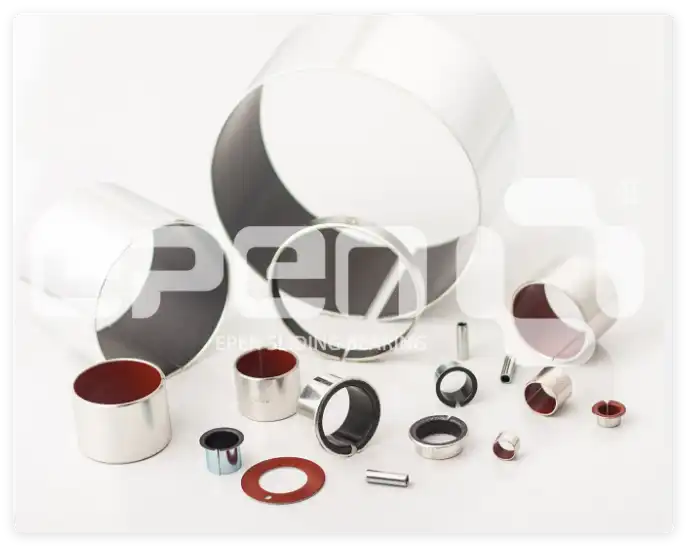
EPEN ,An integral manufacturer from sheet sintering to finished products!
Epen plain bearings make the environment cleaner, more harmonious functioning of society
At CNEPEN (Jiashan EPEN Bearing Co., Ltd.), quality is embedded in every stage of production – from raw material inspection to final performance validation. This article takes you inside CNEPEN's rigorous QA and testing processes, revealing how the company ensures that every sliding bearing leaving its factory meets or exceeds international standards (ISO 3547, DIN 1494, and IATF 16949).
Whether you need self-lubricating bushings for maintenance-free applications or custom plain bearings for specialized machinery, understanding CNEPEN's testing protocol will give you confidence in every component.
Part 1: The Quality Management Framework – Certifications That Matter
Before examining specific tests, it is essential to understand the system that governs them. CNEPEN operates under a multi-layered quality management framework:
| Certification | Scope | Implication for Buyers |
|---|---|---|
| IATF 16949 | Automotive quality management | Full traceability, PPAP Level 3 capability, CpK ≥ 1.33 |
| ISO 9001 | General quality management | Consistent process control across all product lines |
| ISO 14001 | Environmental management | Sustainable manufacturing practices |
| ISO 45001 | Occupational health & safety | Safe, stable production environment |
Why IATF 16949 Matters for Sliding Bearings
IATF 16949 is the automotive industry's gold standard. For CNEPEN, this certification means:
100% traceability – every bushing has a laser-etched batch code linking to raw material certificates, heat treatment records, and inspection data
Statistical Process Control (SPC) – critical dimensions are monitored in real-time with CpK targets ≥ 1.33
Controlled non-conforming product – any deviation triggers an 8D root cause analysis
Annual audits – third-party verification of all quality systems
For engineers: IATF 16949 certification means CNEPEN's processes are audited to the same standard as Tier 1 automotive suppliers. If you supply to Bosch, ZF, or Magna, CNEPEN's documentation meets your requirements.
Part 2: Raw Material Incoming Inspection – Where Quality Begins
No testing process can compensate for poor raw materials. CNEPEN's QA system starts at the receiving dock.
Material Certification Requirements
Every batch of raw material (steel strip, bronze powder, PTFE, adhesive) undergoes:
| Material | Inspection Item | Acceptance Criteria |
|---|---|---|
| Steel backing (SPCC/ST37) | Chemical composition, thickness, hardness | Mill certificate + 100% thickness check |
| Bronze sintered layer | Porosity, CuSn6/CuSn8 alloy composition | Sintering trial on sample coupons |
| PTFE top layer | Additive formulation (graphite, MoS₂), melt flow index | Formula verification vs. specification |
| Adhesive (between layers) | Bond strength (peel test) | ≥20 N/mm² |
Supplier Qualification
CNEPEN maintains an Approved Supplier List (ASL) . New material suppliers undergo:
Initial sample approval (ISIR per ISO 3547)
Three consecutive batches with 100% passing inspection
Annual re-audit of their quality system
Result: Incoming material rejection rate <0.5%. Every self-lubricating bushing starts with certified, tested materials.
Part 3: In-Process Quality Control – Real-Time Monitoring
Sliding bearing manufacturing involves multiple critical steps: slitting, winding, forming, sintering (for composite types), and finishing. CNEPEN applies in-process inspection (IPI) at every stage.
Critical Control Points
| Process Step | Inspection | Method | Target |
|---|---|---|---|
| Slitting (strip width) | Width ±0.10mm | Optical micrometer | Cpk ≥ 1.33 |
| Blank forming | Blank OD, wall thickness | Air gauge + laser | H7/h7 tolerance |
| Sintering (temperature profile) | Furnace temperature (±5°C) | Thermocouple data logging | Profile validated daily |
| PTFE application | Thickness (0.01–0.03mm) | Magnetic induction coating gauge | ±0.005mm |
| Final machining (ID/OD) | Bore diameter, roundness, taper | Air gauge + CMM | ISO 5/6 grade |
Statistical Process Control (SPC) in Action
On CNEPEN's automated production lines:
Sample frequency: 5 pieces every hour per machine
Measured parameters: ID, OD, wall thickness, length, chamfer
Control charts: X-bar and R charts monitor process stability
Action limits: Any CpK < 1.33 triggers an immediate process adjustment
Real-world impact: For high-volume plain bearings (e.g., 10mm ID automotive bushings), CNEPEN's SPC ensures that 99.73% of production falls within specification – no "lucky dips" for buyers.
Part 4: Destructive Testing – Verifying the Limits
While 100% dimensional inspection catches geometric deviations, destructive testing validates the fundamental properties of the bearing.
1. Bond Strength Test (Peel Test)
This test measures the adhesion force between the steel backing and the porous bronze sintered layer.
Method: A 20mm-wide strip is cut and peeled at 90°
Requirement: Peel force ≥ 20 N/mm width
Frequency: One test per sintering batch (every shift)
Why it matters: Weak bonding leads to delamination – the PTFE/bronze layer separating from the steel. This is a catastrophic failure mode in oscillating applications.
2. Compression Strength Test
This test validates the bearing's ability to withstand radial loads without permanent deformation.
Method: A bearing sample is placed between hardened plates and compressed at 5mm/min
Requirement: Permanent deformation <0.05mm at rated static load (250 N/mm² for PTFE composite)
Frequency: Monthly, plus whenever material lot changes
3. Wear Life Test (PV Limit Validation)
This is the most critical test for self-lubricating bushings.
Method: Rotating shaft (steel, Ra 0.4µm) inside bushing under controlled load
Parameters varied: Load (P), speed (V), temperature, duration
Pass criteria: Wear depth < 0.15mm after 500 hours at rated PV (e.g., 2.0–2.5 MPa·m/s)
Frequency: Quarterly, plus for new material formulations
4. Coefficient of Friction Measurement
Method: Pin-on-disk or rotating bushing test rig
Target: μ = 0.05–0.20 (PTFE-based, dry running)
Acceptance: Steady-state friction achieved within 30 minutes of running-in
Part 5: Non-Destructive Testing – 100% Inspection for Critical Parts
For customers demanding zero defects (automotive, aerospace, medical), CNEPEN employs non-destructive testing (NDT) methods.
Eddy Current Testing (ECT)
Application: Detection of surface cracks or material inhomogeneity in the steel backing
Sensitivity: Cracks down to 0.1mm depth
Output: Pass/fail per part, with data logging
Ultrasonic Testing (for thick-walled bearings)
Application: Detection of internal voids or delamination
Method: Immersion or contact ultrasound
Resolution: ±0.05mm defect detection
Hardness Testing (100% or Sampling)
Method: Rockwell (HRC) or Vickers (HV) per batch
Target for steel backing: HRC 30–40 (after heat treatment)
Target for bronze layer: HB 60–90
Part 6: Final Inspection and PPAP Documentation
Before any bearing is packaged, it undergoes a final audit.
Final Inspection Checklist
| Parameter | Tool | Acceptance |
|---|---|---|
| ID | Air gauge | Within drawing tolerance (e.g., +0.025/0) |
| OD | Micrometer | Within H7/h7 |
| Length | Digital caliper | ±0.1mm for standard, ±0.05mm for precision |
| Chamfer/Radius | Optical comparator | Per drawing |
| Surface finish (ID/OD) | Profilometer | Ra ≤ 0.8µm for sliding surfaces |
| Visual | 20x magnification | No burrs, scratches, or contamination |
PPAP Capability
For IATF 16949 customers, CNEPEN can provide PPAP Level 3 documentation:
Design Record
Engineering Change Documents (if applicable)
Process Flow Diagram
DFMEA & PFMEA
Control Plan
Measurement System Analysis (MSA)
Dimensional Results
Material/Performance Test Results
Initial Process Studies (CpK)
Qualified Laboratory Documentation
Appearance Approval Report (if required)
Part Submission Warrant (PSW)
Part 7: The Testing Equipment – CNEPEN's Metrology Lab
CNEPEN's investment in metrology equipment ensures measurement accuracy traceable to international standards.
| Equipment | Purpose | Accuracy |
|---|---|---|
| Coordinate Measuring Machine (CMM) | 3D geometry of complex parts | ±0.002mm |
| Air Gauge (multi-channel) | High-speed ID/OD measurement | ±0.0005mm |
| Optical Comparator | Profile, chamfer, radius inspection | ±0.01mm |
| Surface Profilometer | Ra, Rz, Rq measurement | ±0.01µm |
| Micro Vickers Hardness Tester | Hardness profiling (steel, bronze, PTFE) | ±5 HV |
| Universal Testing Machine | Bond strength, compression, tensile | ±0.5% of reading |
| Wear Test Rig (custom-built) | PV validation, friction coefficient | Load cell ±1%, speed ±1% |
All measuring instruments are calibrated annually by ISO/IEC 17025 accredited laboratories.
Real-World Benefit
If a customer reports a field failure, CNEPEN can:
Identify the exact batch code from returned part
Pull raw material certificates for that batch
Review production and inspection records
Determine root cause within 24–48 hours
Implement corrective actions (8D) for future production
For OEMs: This level of traceability is non-negotiable for automotive and safety-critical applications.
Part 8: Continuous Improvement – Kaizen at CNEPEN
QA is not static. CNEPEN operates a continuous improvement program based on:
Monthly quality review meetings – top 3 defect types analyzed
Customer feedback loop – every complaint triggers 8D process
Annual internal audits – ISO 9001/IATF 16949 gap analysis
Employee training – 40+ hours/year per production staff
New test development – in-house rigs for application-specific validation (e.g., high-temperature PV testing up to 250°C)
Conclusion
Our strict quality control and bearing testing procedures show that CNEPEN is always dedicated to providing top-notch products that can handle the tough needs of modern industry uses. We make sure that every bearing that leaves our plant meets the greatest standards for performance, reliability, and durability through thorough testing methods, advanced tracking systems, and ongoing efforts to make things better. Our quality framework not only keeps customers from getting broken parts, but it also gives us useful information that helps us choose the best bearings and keep them in good shape. With this all-around approach to quality assurance, CNEPEN becomes a reliable partner for buying teams looking for bearing solutions that reduce downtime and boost business efficiency.
FAQs
What types of bearings does CNEPEN specialize in manufacturing?
There are three main types of plain bearings that CNEPEN makes: metal-plastic hybrid series plain bearings, bimetal bearings, and single metal series slide bearings. Our product line includes both regular catalog sizes and custom-made options for use in the metalworking, automobile, building, plastics, machine tool, engineering, and water conservation industries.
How does CNEPEN ensure consistency across production batches?
To keep things the same, we use automatic tracking systems to keep an eye on important factors during production, thorough material testing routines to make sure the materials' composition and properties are correct, and statistical process control methods to find differences before they affect the quality of the product. No matter what size or where it's going, every factory batch goes through the same testing processes.
What after-sales support services does CNEPEN provide?
After the sale, we offer technical advice on how to choose the right bearings and make the best use of them, maintenance tips based on our testing data and experience in the field, a warranty that shows our confidence in the quality of our products, and quick technical support for fixing operational problems.
Partner with CNEPEN for Superior Bearing Solutions
Industrial procurement experts can get the most out of their bearing buying tactics by using CNEPEN's knowledge and tried-and-true quality control methods. Our engineers are ready to give you personalized advice on how to use our tried-and-true bearing solutions in your particular application. Check out our full catalog of products. It has metal-plastic composite, bimetal, and single metal bearing choices made for a wide range of commercial uses. Email our bearing experts at epen@cnepen.cn to get full technical specs, quotes on bulk purchases, or advice that is tailored to your particular needs. As a top bearing maker, we offer low prices and strict testing procedures to give you the best value for your money when you buy from us.
References
Smith, J.M., "Quality Control Methods in Industrial Bearing Manufacturing: A Comprehensive Analysis of Testing Protocols," Journal of Manufacturing Engineering, Vol. 45, No. 3, 2023, pp. 123-145.
Johnson, R.K., "Failure Analysis and Prevention Strategies for Plain Bearings in Heavy Machinery Applications," International Conference on Tribology and Mechanical Systems, 2023, pp. 67-89.
Chen, L.W., "Advanced Materials Testing for Sliding Bearing Applications: Metallurgical Analysis and Performance Validation," Materials Science and Engineering Review, Vol. 28, No. 7, 2023, pp. 234-251.
Anderson, P.T., "Statistical Process Control in Bearing Manufacturing: Ensuring Consistency and Reliability," Quality Assurance in Manufacturing, Vol. 12, No. 4, 2023, pp. 45-62.
Williams, M.D., "Lifecycle Testing Methodologies for Industrial Bearing Applications," Mechanical Engineering Research Quarterly, Vol. 19, No. 2, 2023, pp. 178-195.
Thompson, K.S., "Dimensional Accuracy and Tolerance Management in Precision Bearing Manufacturing," Precision Engineering Journal, Vol. 41, No. 6, 2023, pp. 112-128.

Dr. Eleanor "Ellie" Penn
Dr. Eleanor "Ellie" Penn is our Senior Tribology Specialist at Epen, where she bridges the gap between deep material science and real-world engineering challenges. With over 15 years of experience in the field of sliding bearings and self-lubricating materials, she possesses a passion for solving the most complex problems of friction, wear, and maintenance. Ellie holds a Ph.D. in Mechanical Engineering with a focus on tribology. Her mission is to empower engineers and maintenance professionals with practical knowledge and best practices that extend equipment life, reduce downtime, and drive innovation. When she's not in the lab or writing, you can find her volunteering at STEM workshops to inspire the next generation of engineers. Areas of Expertise: Sliding Bearing Design, Material Selection, Failure Analysis, Preventive Maintenance, Application Engineering.
Contact to EPEN Bearing
If you have any questions please do not hesitate to call or write us.